New South Wales
Byron Bay
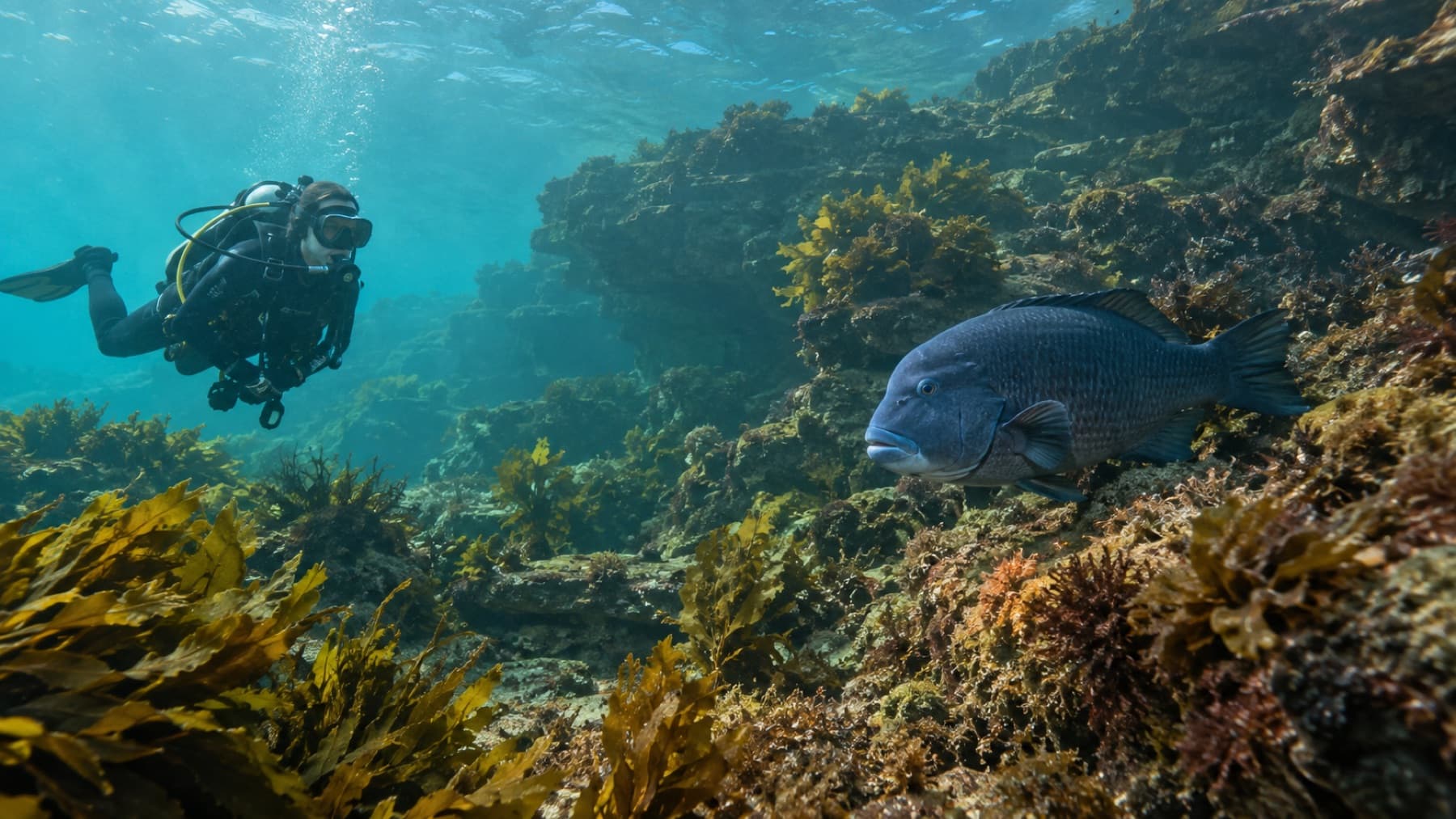
Julian Rocks — a tropical-temperate crossover site with more than 20 recorded shark and ray species.
Julian Rocks, also known as Nguthungulli, lies around 2.5 kilometres offshore from Byron Bay and is the reason people dive here. Almost all Byron diving is a short boat ride to this one marine reserve.
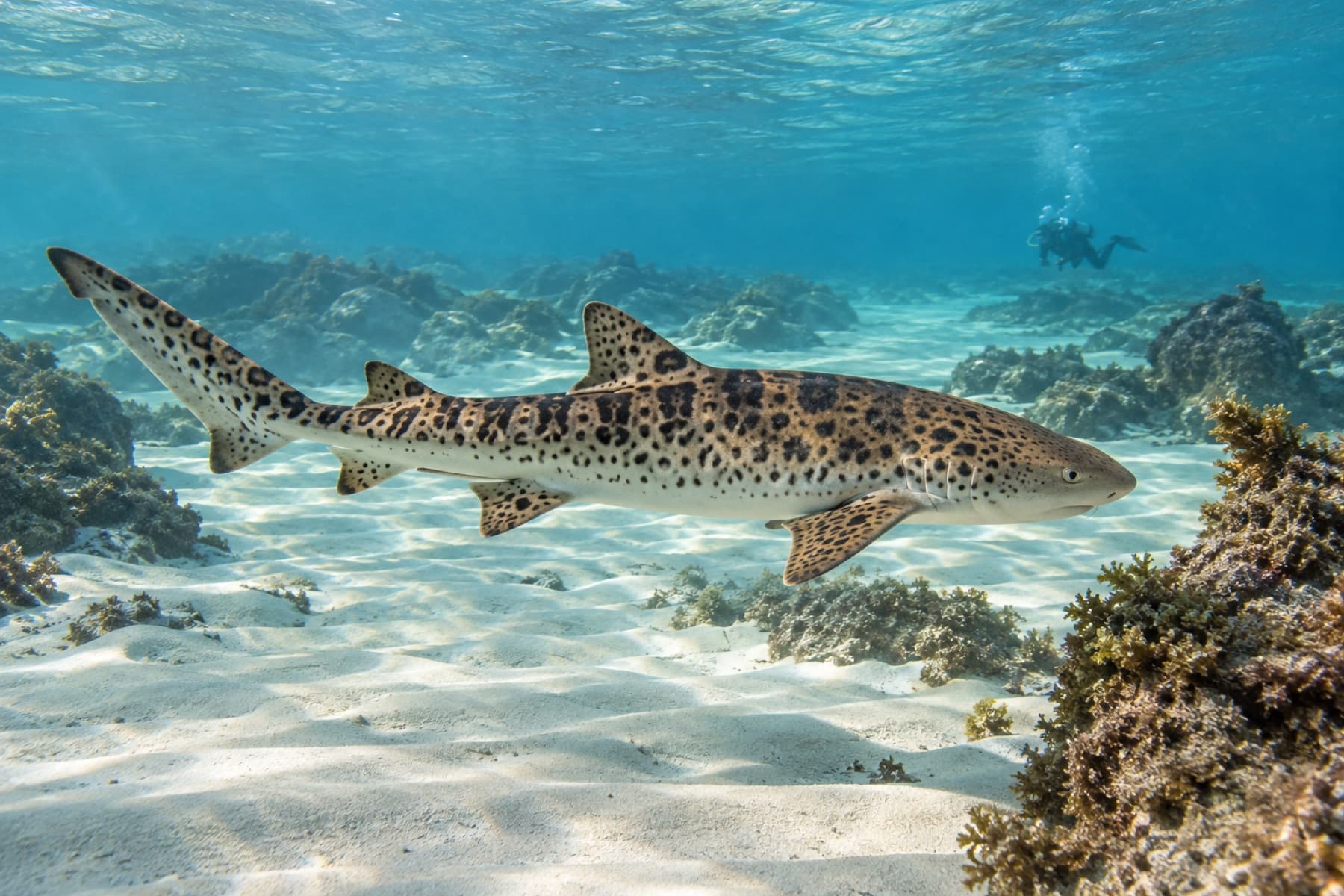
The location sits at an ecological transition where tropical and temperate influences meet. Visit NSW records more than 20 shark and ray species and highlights seasonal appearances of leopard sharks, manta rays and grey nurse sharks.
Late summer often provides warmer water and strong tropical influence, while grey nurse sharks are commonly associated with cooler months. That seasonal split is the single most useful thing to understand before booking.
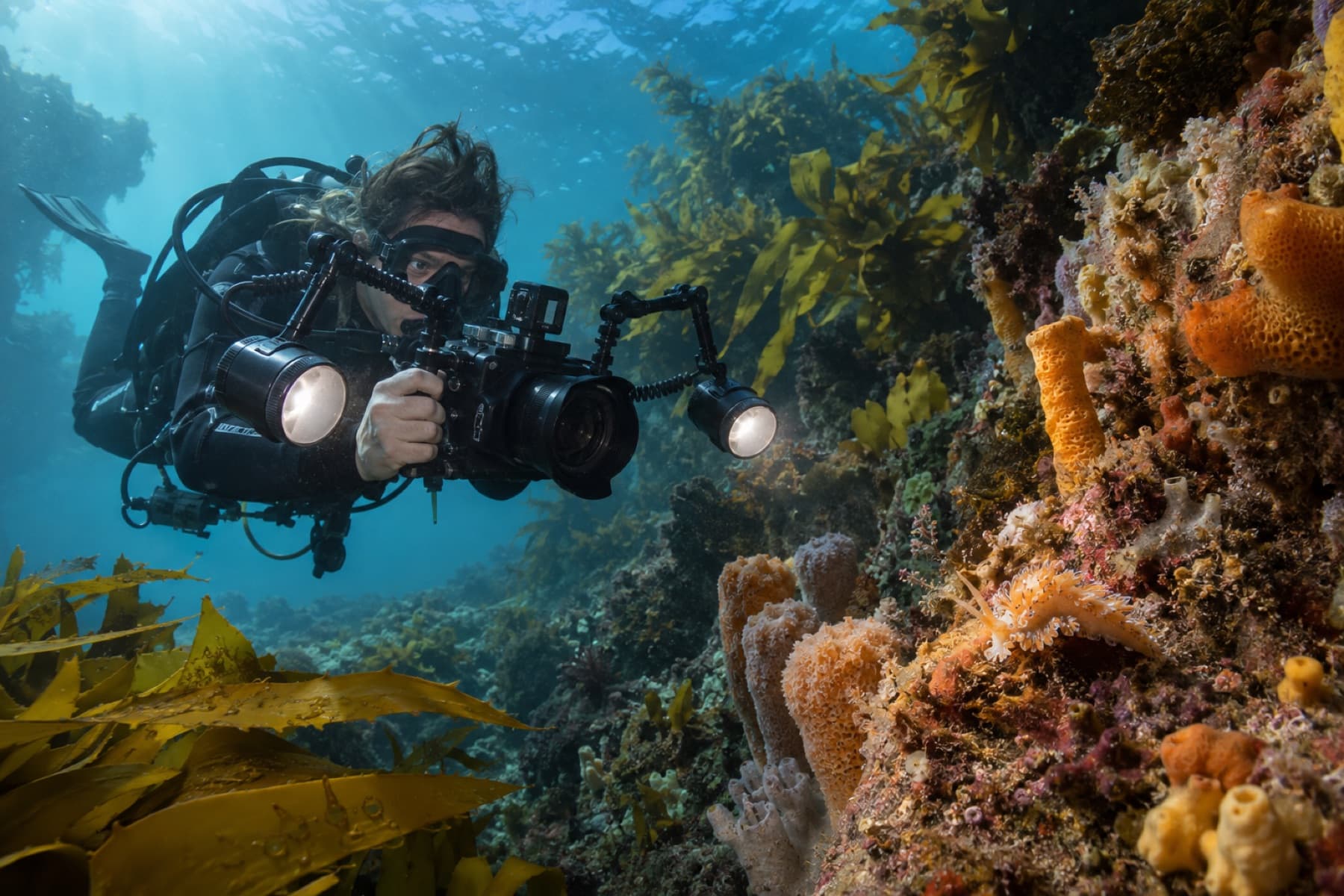
Byron is also an unusually good place to do an introductory dive, because the site is close, sheltered in most conditions and reliably full of life.
| Water temperature | Roughly 19–26°C, warmest February to April. |
|---|---|
| Visibility | Commonly 10–30 m, best when the East Australian Current runs. |
| Season | Year-round. Leopard sharks and manta rays broadly summer; grey nurse sharks more associated with cooler months, roughly June to November. |
| Diving types | Marine reserve, Shark diving, Training, Photography |
| Businesses documented | 2 |
| Dive sites documented | 1 |
It demonstrates why "best season" depends on the animal you want to see rather than on a single peak month.
A diver seeking manta rays may prefer a completely different period from someone seeking grey nurse sharks. Both are correct answers to the question "when should I dive Byron Bay?", and they are months apart.
The site is exposed to swell from several directions and trips are weather-dependent. Current varies from negligible to significant depending on the day and the specific part of the reserve.
Depth ranges from a few metres in the shallow gutters to around 25 metres at the deeper edges, so the site accommodates a wide range of experience levels.
Each profile separates what is verified from what is advertised, and lists the questions still worth asking the operator directly.
Before you book
Capabilities and requirements change. Read how to choose a dive centre for what to actually evaluate, and confirm certification requirements, equipment hire and conditions directly with the operator before travelling.