Recreational training
Learning to Dive
What entry-level scuba training actually involves, and how to judge a course before you book it.
Scuba certification is not simply permission to breathe underwater. A good beginner course teaches a diver to control buoyancy, manage equipment, understand pressure, communicate with a buddy and solve basic underwater problems without panic.
Every recognised entry-level course has the same three parts: knowledge development, confined water and open water. What varies — enormously — is how much time a student gets in each, and how much of that time is spent becoming genuinely comfortable rather than simply completing each skill once.
That is the single most useful thing to evaluate before booking. A course that ticks every box in three days and a course that does the same work across six weekends produce different divers, and neither is automatically correct for every student.
| Track | Recreational |
|---|
- pressure, equalisation and how depth affects the body
- buoyancy control and weighting
- breathing gas, nitrogen absorption and decompression concepts
- dive computers and dive planning
- equipment assembly, checks and care
- buddy procedures and communication
- problem management and emergency ascents
- environmental awareness
The theory component covers the physics and physiology that make diving safe, and most agencies now deliver it online before you arrive.
The value is not in memorising tables. It is in understanding why the rules exist, because that is what lets a diver make sensible decisions when a dive does not go according to plan.
Confined water is where skills are learned, in a pool or pool-like conditions. The purpose should be competence, not simply completing each skill once.
- regulator recovery and clearing
- mask clearing and mask removal
- alternate-air-source use
- buoyancy control and hovering
- weight-system removal and replacement
- equipment removal and replacement
- emergency ascent procedures
- cramp removal and tired-diver tows
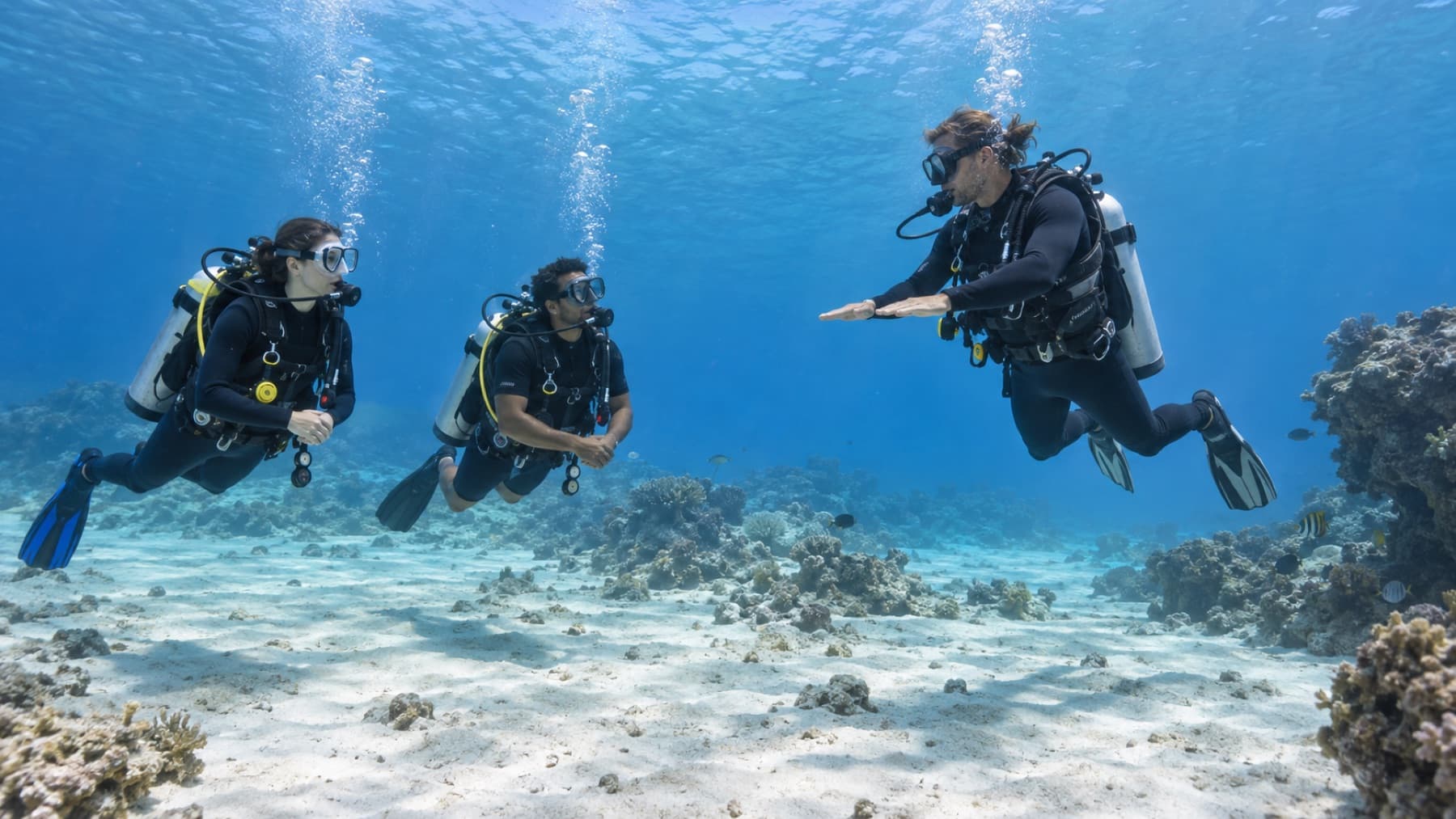
The student applies those skills in a real environment, and this is where diving actually starts making sense.
The open-water dives introduce every variable a pool cannot: waves, current, visibility, navigation, depth, entries and exits, boats and marine life.
A tropical course offers warm water, less exposure protection, good visibility and an attractive reef environment. A temperate course offers experience with thicker suits, shore entries, cooler water, variable visibility and heavier weighting.
Neither automatically produces a better diver. The quality of instruction matters more than the water temperature — but a diver certified entirely in warm water should expect to need an orientation before diving somewhere cold.
These questions separate courses far more reliably than price does.
- How many students per instructor in the water?
- How many open-water dives, and where?
- Is confined water in a pool or in the ocean?
- What equipment is included and what costs extra?
- What happens if I need an extra session to get comfortable?
- What are the medical requirements and can I clear them in advance?
- What happens if conditions cancel a day?
Natural next steps
Courses that build directly on this one.
Centres documented as offering this level of training
Businesses where the relevant capability is verified or advertised. Always confirm the specific course directly.
Frequently asked questions
How long does it take?
Typically three to four days if done intensively, or several weekends if spread out. Intensive courses are not inherently worse, but they leave less room for a student who needs extra time.
Do I need to be a strong swimmer?
Most agencies require a basic swim and a float or tread-water assessment. You do not need to be fast, but you do need to be comfortable in water without touching the bottom.
What medical clearance do I need?
You complete a medical questionnaire, and certain answers require sign-off from a doctor. Sorting this out before you travel avoids losing days of a booked course.
Do I need to buy equipment first?
No. A mask, snorkel and fins are worth owning early because fit matters. Regulators and BCDs can reasonably wait until you know what kind of diving you prefer.
Is my certification valid everywhere?
Entry-level certifications from the major agencies are recognised internationally and do not expire. Operators may still require a refresher if you have not dived for a long period.