Northern Territory dive centres
A small market with a genuinely distinctive environment: large tides, variable visibility and significant wreck history.
The Northern Territory has a much smaller recreational scuba market than Queensland, New South Wales, Victoria or Western Australia. That does not mean it should be reduced to a thin directory page.
Darwin has a distinctive diving environment dominated by large tides, variable visibility, wrecks, tropical conditions and the importance of local knowledge. It is one of the few places in Australia where tidal range alone determines whether a dive happens.
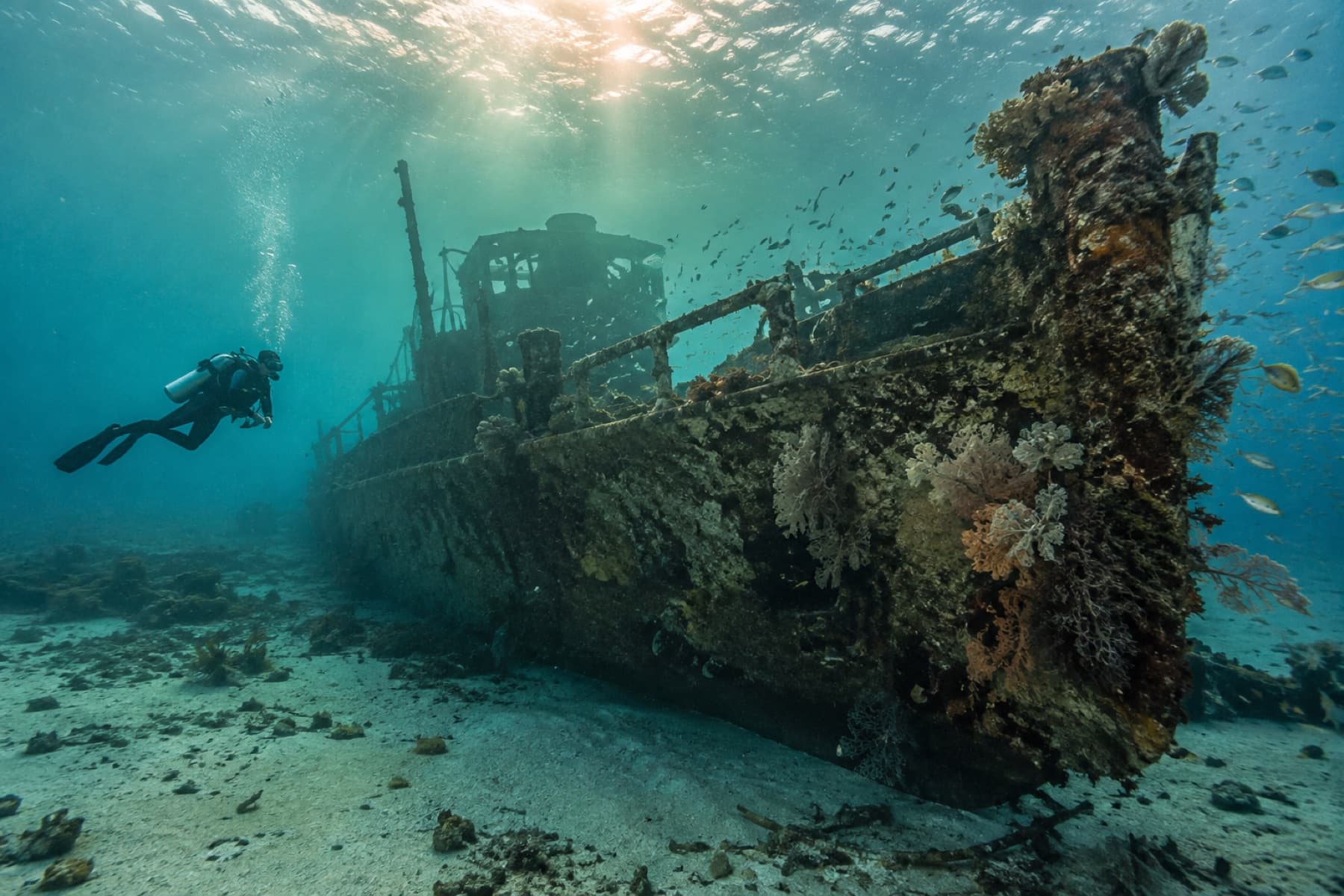
Darwin Harbour is not a clear-water coral-reef destination, and content that implies otherwise sets visiting divers up for disappointment. What it offers instead is genuine wreck history, including vessels associated with the 1942 bombing of Darwin.
This is a destination where booking with an operator who knows the tide tables is not a preference. It is the entire basis of diving there safely and usefully.
Northern Territory is organised by region because conditions, marine life and the kind of business that survives locally vary enormously within the state.
- WWII and historic wreck diving
- Large tidal range and tide-critical site timing
- Tropical water temperatures year-round
- Local training in genuine Territory conditions
- Technical diving availability
- Small operator market where local knowledge dominates
| Water temperature | Warm year-round, commonly 25–31°C, peaking through the build-up and wet season. |
|---|---|
| Visibility | Highly variable and tide-dependent. Can range from very poor to reasonable within the same site on the same day. |
| Season | The dry season, broadly May to October, generally offers the most settled conditions. Site timing within any season is governed by tide. |
| Regions documented | 1 |
| Businesses documented | 1 |
| Dive sites documented | 1 |
Darwin experiences a very large tidal range. The practical effect is that current, access, visibility and even whether a site is diveable at all change through the day on a predictable but unforgiving schedule.
Divers should expect an environment where visibility varies greatly, tides matter, site timing matters and wreck history is significant. That combination makes local operator knowledge particularly important — more so than equipment or certification level.
Local training provides experience in actual Territory conditions, which is valuable for residents who intend to keep diving locally rather than only on holiday.
A diver trained in Darwin learns to read tides, manage moderate visibility and plan around a schedule the ocean sets. Those are transferable skills.
- where confined-water training occurs
- where the open-water dives actually happen
- how tides affect scheduling and what the backup plan is
- what happens if conditions are unsuitable on your booked day
- what equipment is included and what is hired separately
Wreck penetration should be classified separately from external recreational wreck diving, and a dedicated wreck guide should document name, history, depth, orientation, access, visibility, current and certification requirements for each vessel.
The presence of advertised technical courses does not by itself imply permanent Trimix or CCR support. Those should be verified independently.
Equipment notes for Northern Territory
- A 3 mm suit or shorty is generally adequate; exposure protection here is mostly about stingers and abrasion rather than cold.
- A reliable light is worth carrying given variable visibility, even on daytime dives.
- SMB and reel use is sensible where current and boat traffic are factors.
Every documented site in the state, with conditions, marine life and the operators known to service them.
1 businesses, grouped by region. Each profile records what is verified, what is advertised and what still needs checking with the operator.
Frequently asked questions
Is there Great Barrier Reef-style diving in Darwin?
No. Darwin's environment is fundamentally different and is strongly associated with tidal harbour diving and wrecks rather than clear-water coral reef.
Can I learn to dive in Darwin?
Yes. Local operators advertise recreational pathways from entry level through professional and technical training, conducted in genuine Territory conditions.
Is visibility always poor?
Visibility is variable rather than uniformly poor. It changes with tide, season and site, and conditions should be checked with local operators close to the day.
Why do tides matter so much?
Darwin's large tidal movement affects current, access and visibility. Getting site timing right can be the difference between a good dive and no dive at all.