Recreational training
Deep Diver
Extending recreational limits to 40 metres, with the gas planning and narcosis awareness that requires.
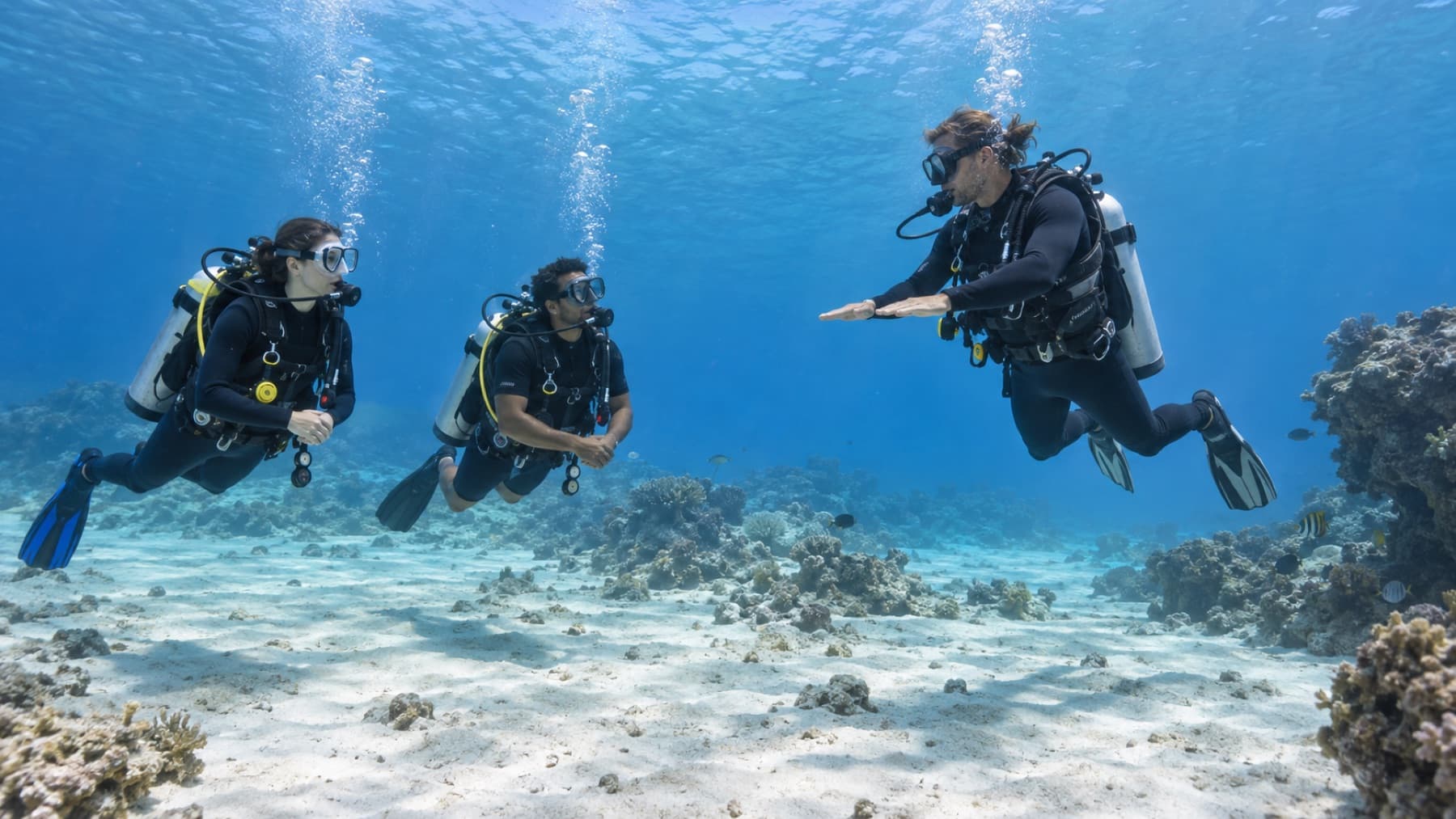
Deep Diver extends the recreational depth limit to around 40 metres, which is the accepted boundary of recreational diving on air.
The course focuses on what actually changes with depth: gas consumption rises steeply, no-decompression limits shrink rapidly, narcosis becomes noticeable, and the margin for error narrows considerably.
It is also where divers first encounter the reasoning that underpins technical training, which makes it a natural stepping stone for anyone considering that direction.
| Track | Recreational |
|---|---|
| Prerequisites | Advanced Open Water or equivalent; Some agencies require a minimum number of logged dives |
| Agency equivalents | PADI: Deep Diver · SSI: Deep Diving · SDI: Deep Diver · RAID: Deep 40 |
- deep dive planning and gas management
- narcosis recognition and management
- rapidly shrinking no-decompression limits
- safety stops and contingency planning
- the value of a redundant gas supply
- colour loss and the need for lighting
At 40 metres you are breathing gas five times as fast as at the surface, and the no-decompression limit is a small fraction of what it is at 18 metres.
A dive that felt relaxed at 20 metres becomes a tightly managed exercise at 40. The course exists to make that shift explicit rather than something a diver discovers mid-dive.
Forty metres is the conventional recreational limit largely because beyond it, air becomes increasingly problematic — narcosis and gas density both worsen, and no-decompression time becomes negligible.
Going deeper responsibly means helium, staged decompression and redundancy, which is technical diving rather than an extension of recreational practice.
Where this qualification matters in Australia
Sites where holding this certification genuinely changes what you can do — not a list of everywhere it is accepted.
Natural next steps
Courses that build directly on this one.
Courses that lead here
Agency versions of this course
The same qualification under different names. All are mutually recognised by operators.
Centres documented as offering this level of training
Businesses where the relevant capability is verified or advertised. Always confirm the specific course directly.
Frequently asked questions
Do I need Deep Diver for most Australian sites?
Not for most. Advanced Open Water covers the majority of Australian dive sites. Deep Diver becomes relevant for specific wrecks, walls and offshore sites.
Should I dive Nitrox for deep dives?
Nitrox extends no-decompression limits but has a shallower maximum operating depth. At 40 metres, air or a mild Nitrox mix is typical; the deeper you go, the less enriched air helps.
Is 40 metres on air safe?
It is within recreational standards, but narcosis at that depth is significant for most divers. Training, conservatism and a well-planned gas reserve all matter more than at shallower depths.