Recreational training
Wreck Diver
Diving wrecks safely, and understanding where external touring ends and penetration begins.
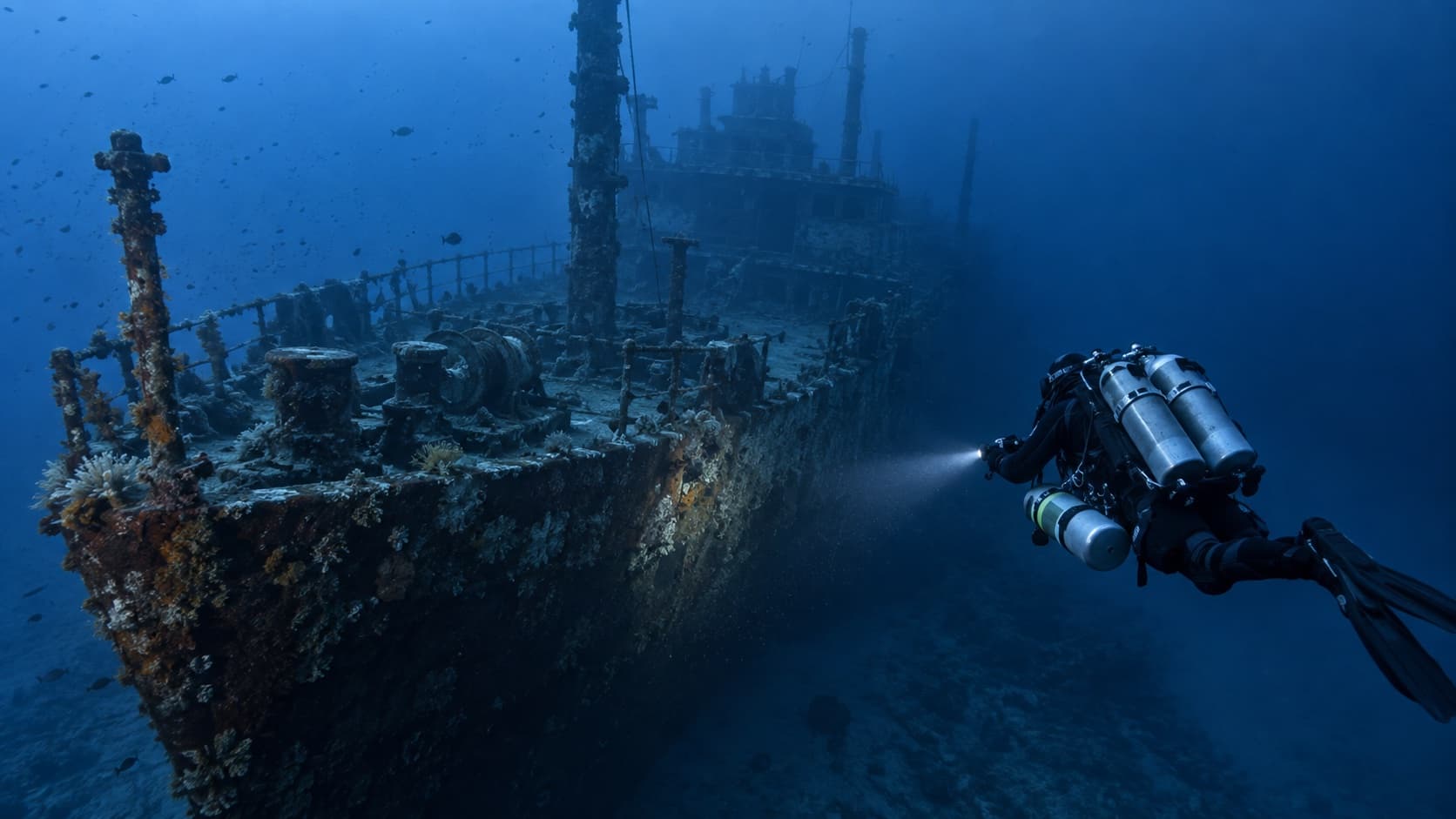
Wreck Diver covers the specific hazards and techniques of diving shipwrecks: navigation around large structures, entanglement risk, sharp metal, silt and the disorientation that a complex structure produces.
The most important distinction the course draws is between swimming around a wreck and entering it. These are genuinely different activities with different training, equipment and risk profiles.
Australia has exceptional wreck diving — the SS Yongala, HMAS Canberra, the ex-HMAS Brisbane, HMAS Swan, the Ships' Graveyard and Darwin's WWII losses — which makes this one of the more practically useful specialties here.
| Track | Recreational |
|---|---|
| Prerequisites | Advanced Open Water or equivalent; Deep Diver recommended for deeper wrecks |
| Agency equivalents | PADI: Wreck Diver · SSI: Wreck Diving · SDI: Wreck Diver · TDI: Advanced Wreck |
- wreck navigation and orientation
- entanglement avoidance and cutting tools
- silt management and finning technique
- penetration lines and reel use where taught
- assessing structural hazards
- legal and heritage considerations
Swimming around a wreck and penetrating enclosed spaces are not the same activity. A general wreck dive should not be confused with technical wreck penetration.
Recreational wreck courses typically cover limited penetration within the light zone, with a continuous guideline. Full technical wreck training deals with genuine overhead environments and is a separate discipline.
Many Australian wrecks are protected historic sites, and some — such as the SS Yongala — are also gravesites where penetration is prohibited entirely.
Nothing may be removed from a protected wreck. Understanding the legal status of a site is part of diving it properly.
Where this qualification matters in Australia
Sites where holding this certification genuinely changes what you can do — not a list of everywhere it is accepted.
Natural next steps
Courses that build directly on this one.
Courses that lead here
Agency versions of this course
The same qualification under different names. All are mutually recognised by operators.
Centres documented as offering this level of training
Businesses where the relevant capability is verified or advertised. Always confirm the specific course directly.
Frequently asked questions
Can I penetrate a wreck after this course?
Recreational wreck training typically covers limited penetration within the light zone using a guideline. Deeper or more complex penetration requires technical wreck training.
Do I need special equipment?
A cutting tool, a good light and a reel are standard. Penetration diving adds redundancy requirements that recreational configurations generally do not meet.
Which Australian wreck should I start with?
The ex-HMAS Brisbane and HMAS Swan were both prepared specifically for diving, which makes them more forgiving introductions than historic losses.