Marine life
Manta Ray
Mobula alfredi
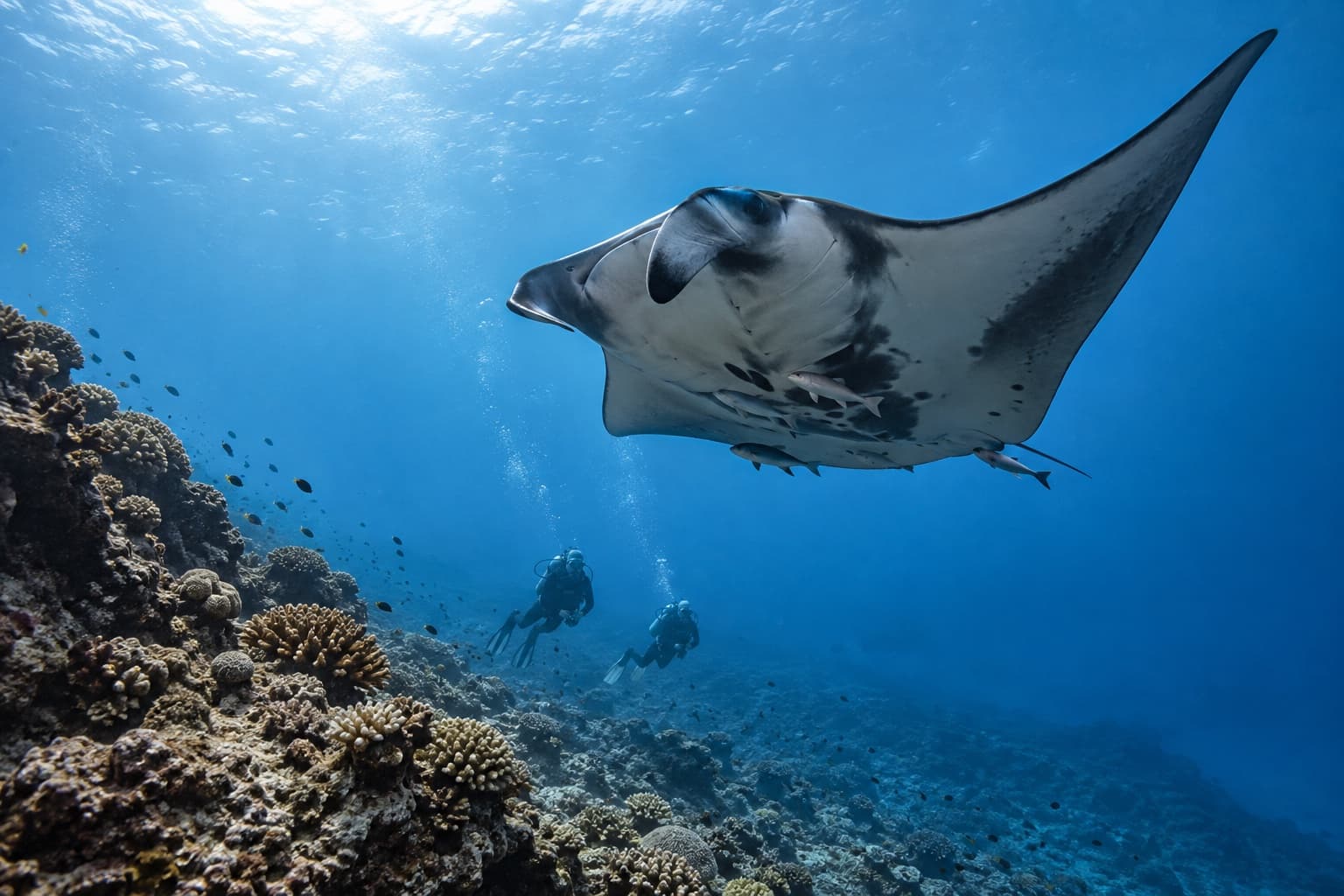
Reef mantas at cleaning stations — Lady Elliot and Ningaloo are the most reliable encounters in Australia.
Reef manta rays are the animal most likely to make a diver stop moving entirely. They are large, unhurried and openly curious, and at cleaning stations they will circle a stationary group of divers for an entire dive.
Australia has two very different reliable manta destinations. Lady Elliot Island at the southern tip of the Great Barrier Reef has cleaning stations that produce encounters through much of the year, peaking in the cooler months. Ningaloo has a resident population year-round.
East coast sites like Flat Rock and Julian Rocks get them seasonally, riding the warm push of the East Australian Current through summer.
| Scientific name | Mobula alfredi |
|---|---|
| Typical size | Commonly 3–4 m wingspan |
| Conservation status | Vulnerable |
| Peak months | May, June, July, August |
| Documented sites | 7 |
| States | Queensland, Western Australia, New South Wales |
- enormous diamond-shaped pectoral 'wings'
- paired cephalic fins rolled or extended at the front of the head
- terminal mouth at the very front of the head
- unique belly spot pattern, used to identify individuals
- no stinging barb, unlike stingrays
- Filter feeds on plankton, often in slow barrel rolls through dense patches.
- Visits cleaning stations where wrasse and butterflyfish remove parasites.
- Frequently curious about stationary divers, especially bubble streams.
Manta encounters are rarely random. They concentrate at specific bommies where cleaner fish live, and the animals return repeatedly because the service is useful to them.
This is why behaviour at those sites matters disproportionately. Divers who settle on or crowd the station interrupt the cleaning, and the mantas simply leave.
In-water etiquette
Manta Ray is vulnerable. How divers behave around it genuinely matters.
- At a cleaning station, stay low and to the side — never settle on the station itself.
- Do not swim toward, chase, or attempt to touch.
- Keep bubbles away from directly beneath an animal.
- Photograph the belly pattern if the operator collects identification data.
Where to see them
Sites where this species is documented as a reliable encounter.
Operators servicing those sites
Businesses documented as diving the sites above. Confirm seasonality and requirements directly.
Often seen on the same dives
Frequently asked questions
Where is the best place to see manta rays in Australia?
Lady Elliot Island is the most consistently reliable, with cleaning stations producing encounters through much of the year. Ningaloo has a resident population year-round.
Do manta rays sting?
No. Unlike stingrays, mantas have no stinging barb. They are filter feeders and entirely harmless.
Last researched: September 2026. Dive businesses change frequently — confirm current services, prices and requirements directly with the operator before booking.