Marine life of Australia
26 species and habitats that divers travel for — where each one is reliably encountered, in which months, and how to behave around it.
Most questions divers ask about Australian dive sites are really questions about animals. When can I see leopard sharks at Julian Rocks? Where do I find a leafy seadragon? Is the cuttlefish aggregation on yet?
Each page here covers identification, behaviour, the sites where the species is genuinely reliable, a month-by-month seasonality strip, and in-water etiquette — because several of these animals are endangered and a few of them are easy to harm without noticing.
Seasonality is the part worth reading closely. There is rarely a single best month to dive an Australian site; there is a best month for the animal you want to see, and those answers can be six months apart at the same reef.
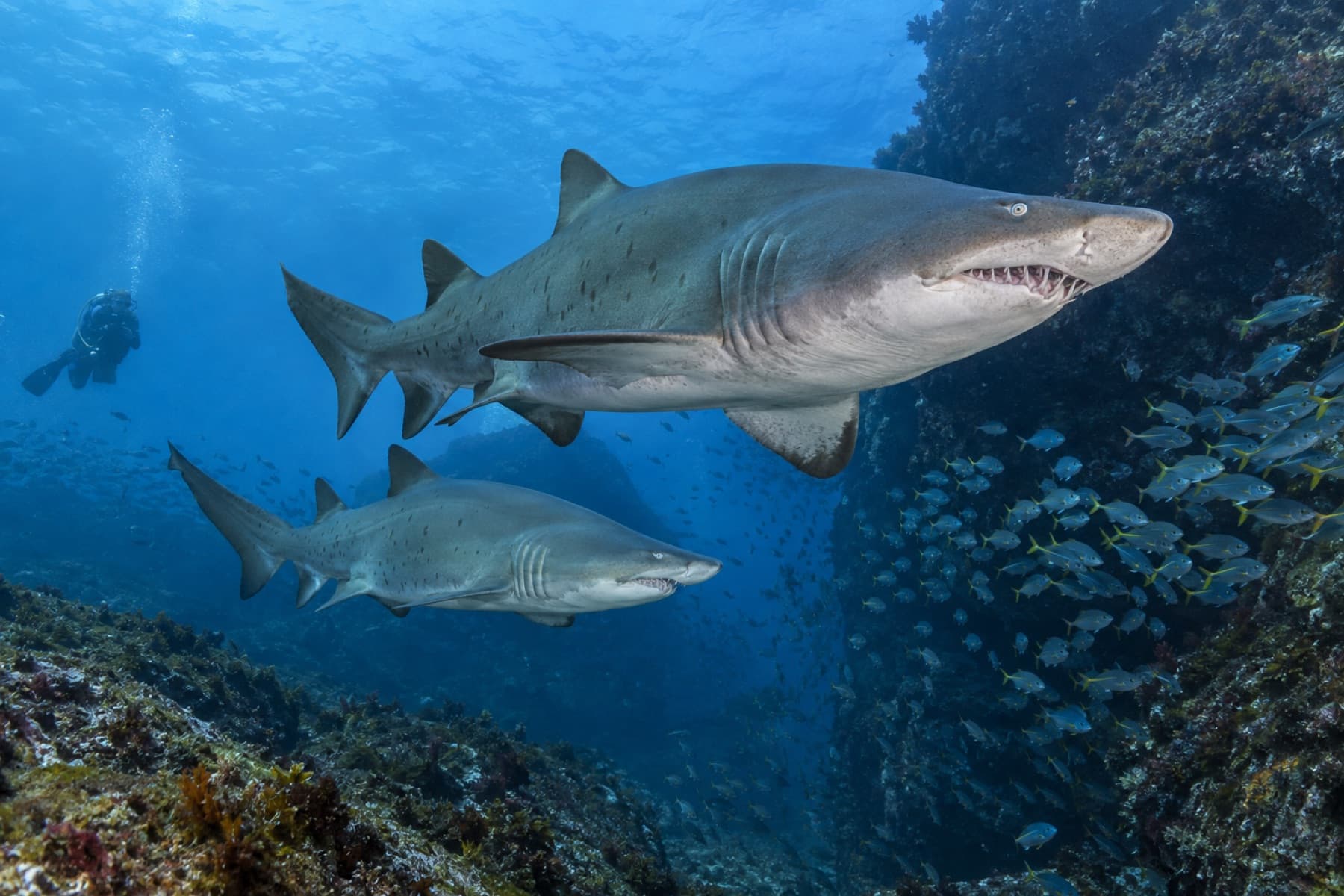
Grey nurse, whale sharks, wobbegongs and more.
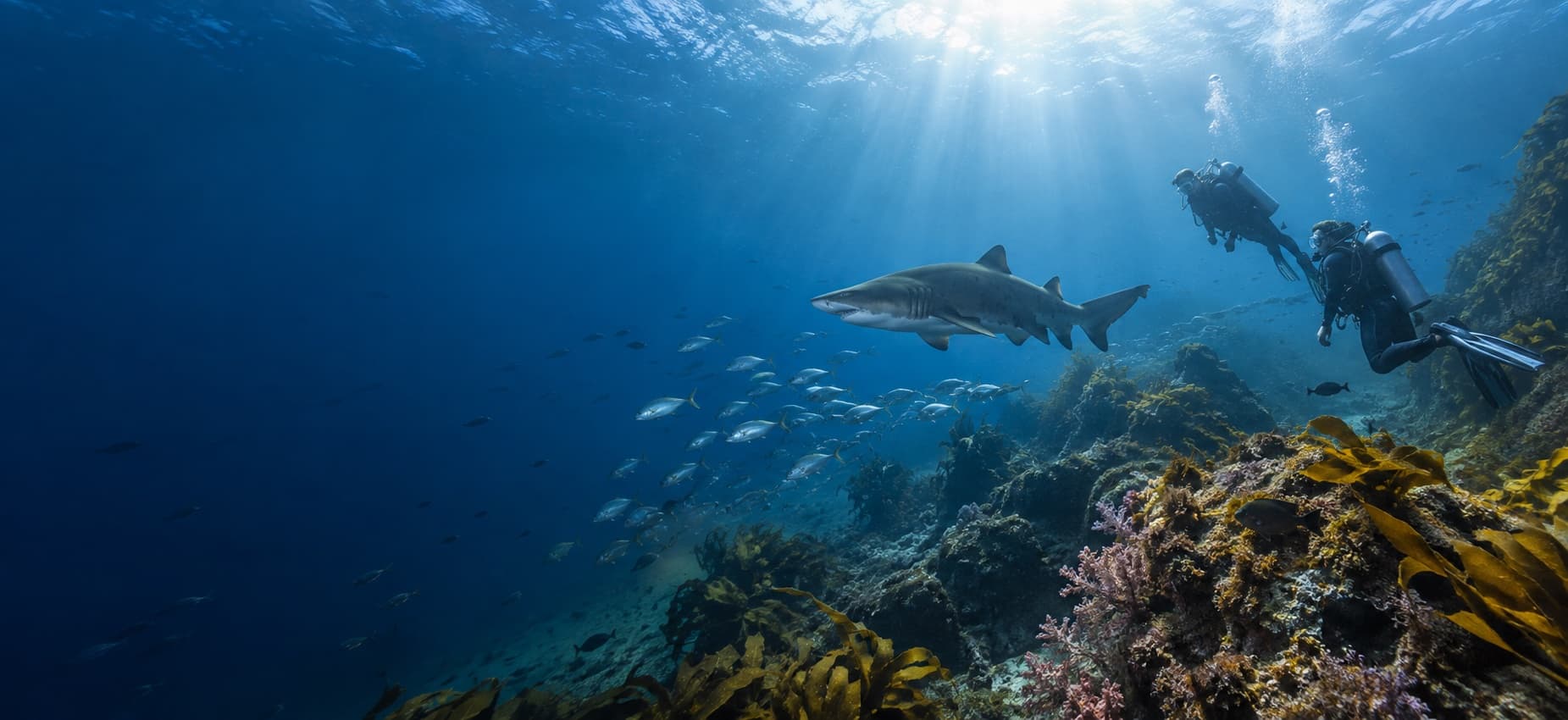
 Great White SharkEncountered in Australia from a cage at the Neptune Islands — wildlife tourism rather than scuba diving.Grey Nurse SharkAustralia's most recognisable dive shark — ragged teeth, entirely harmless, and critically endangered on the east coast.
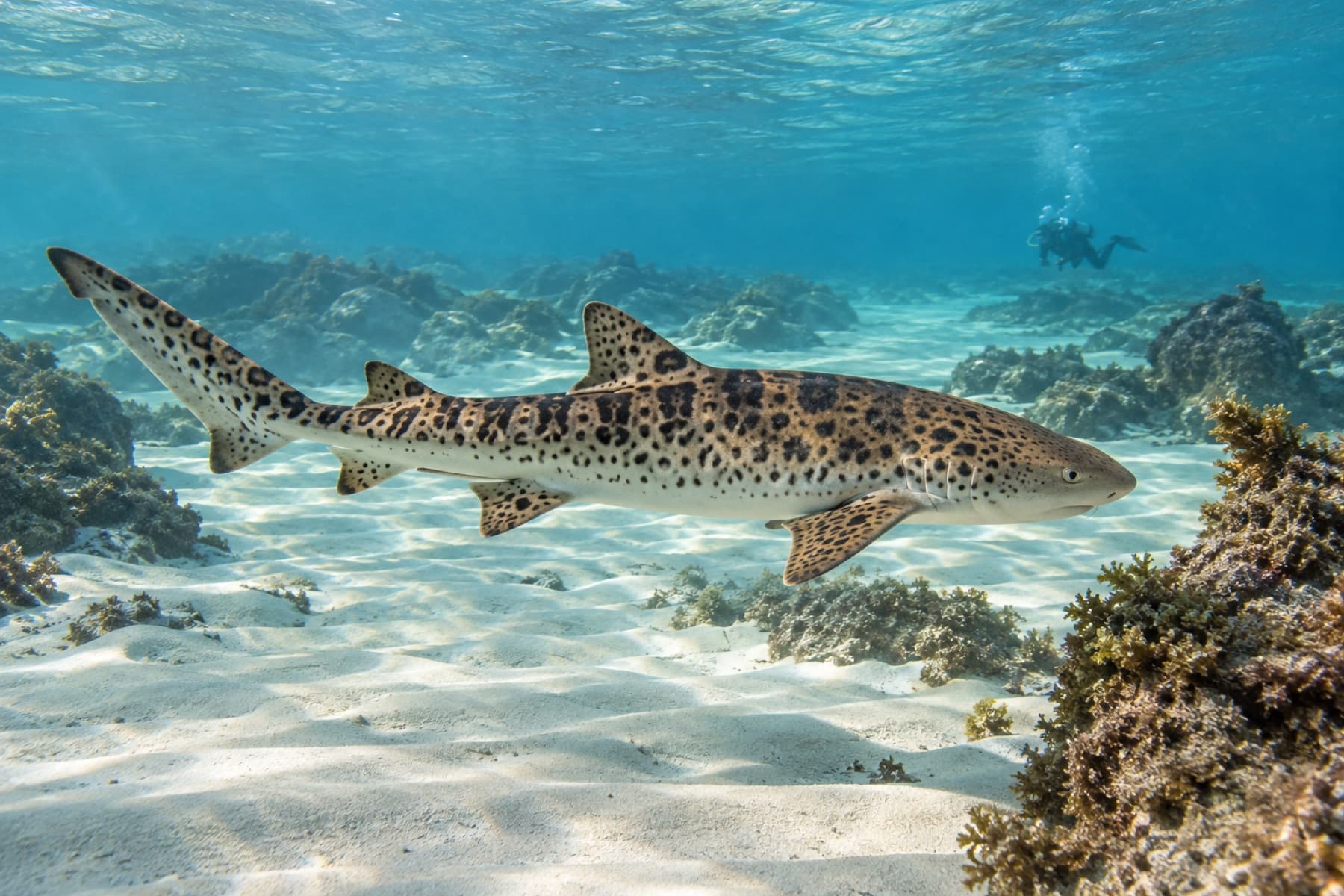 Leopard Shark (Zebra Shark)A docile, spotted bottom-resting shark that arrives on the east coast with summer's warm water.
 Port Jackson SharkA small, harmless, harness-marked shark that gathers in southern NSW winters to breed.
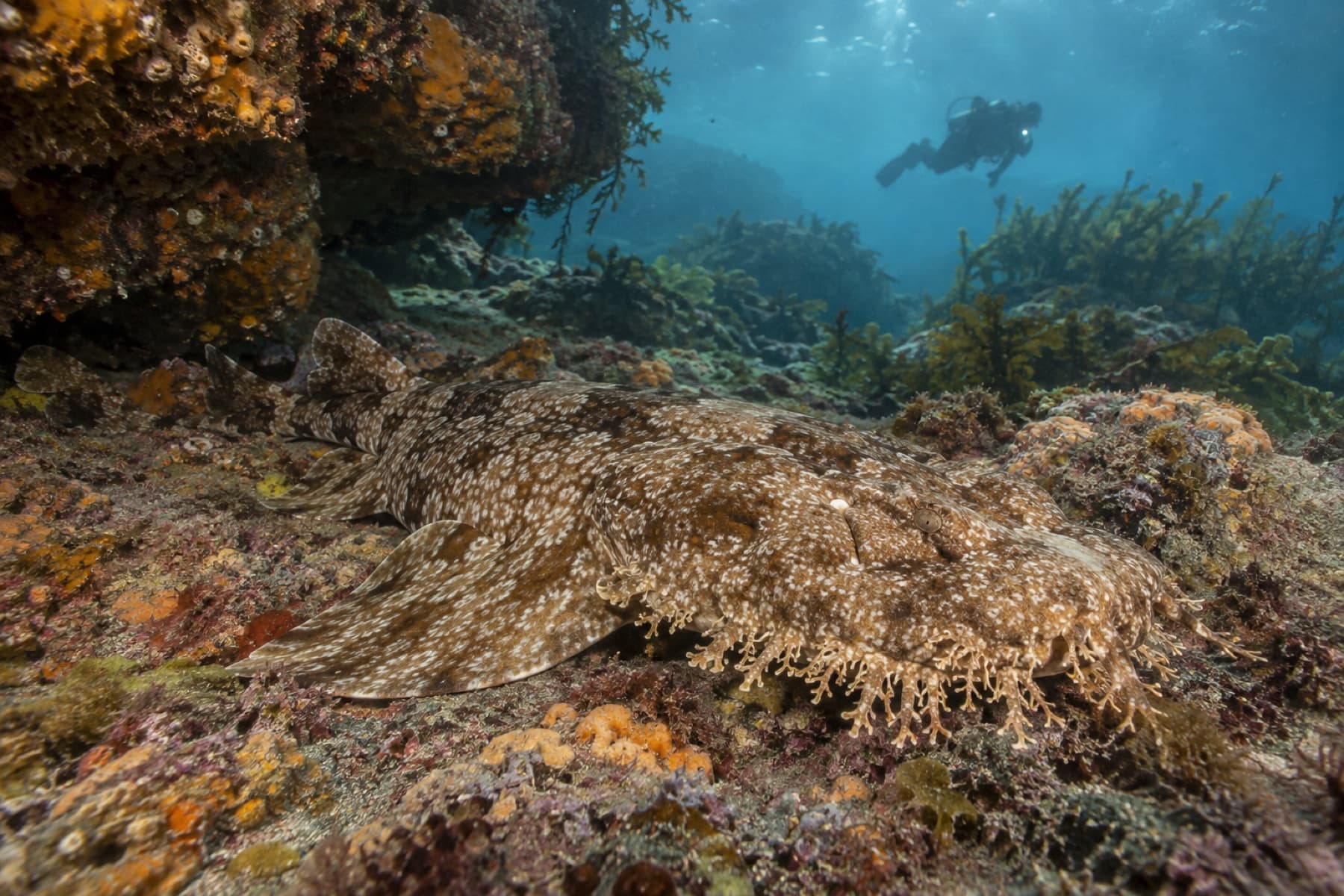
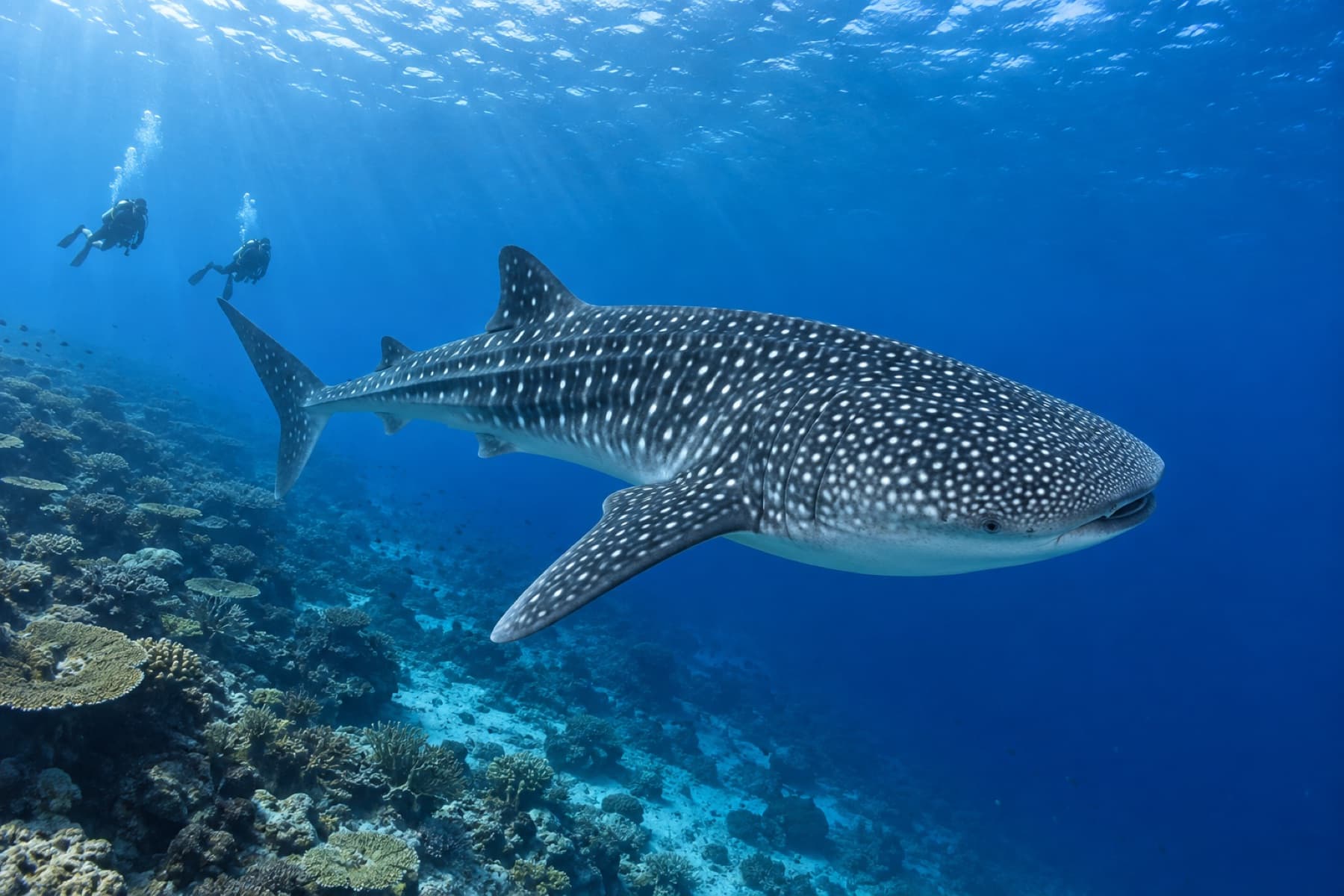 Whale SharkThe world's largest fish, and at Ningaloo an encounter you snorkel with rather than dive.WobbegongCarpet sharks so well camouflaged that most divers swim straight past them — and occasionally put a hand on one.
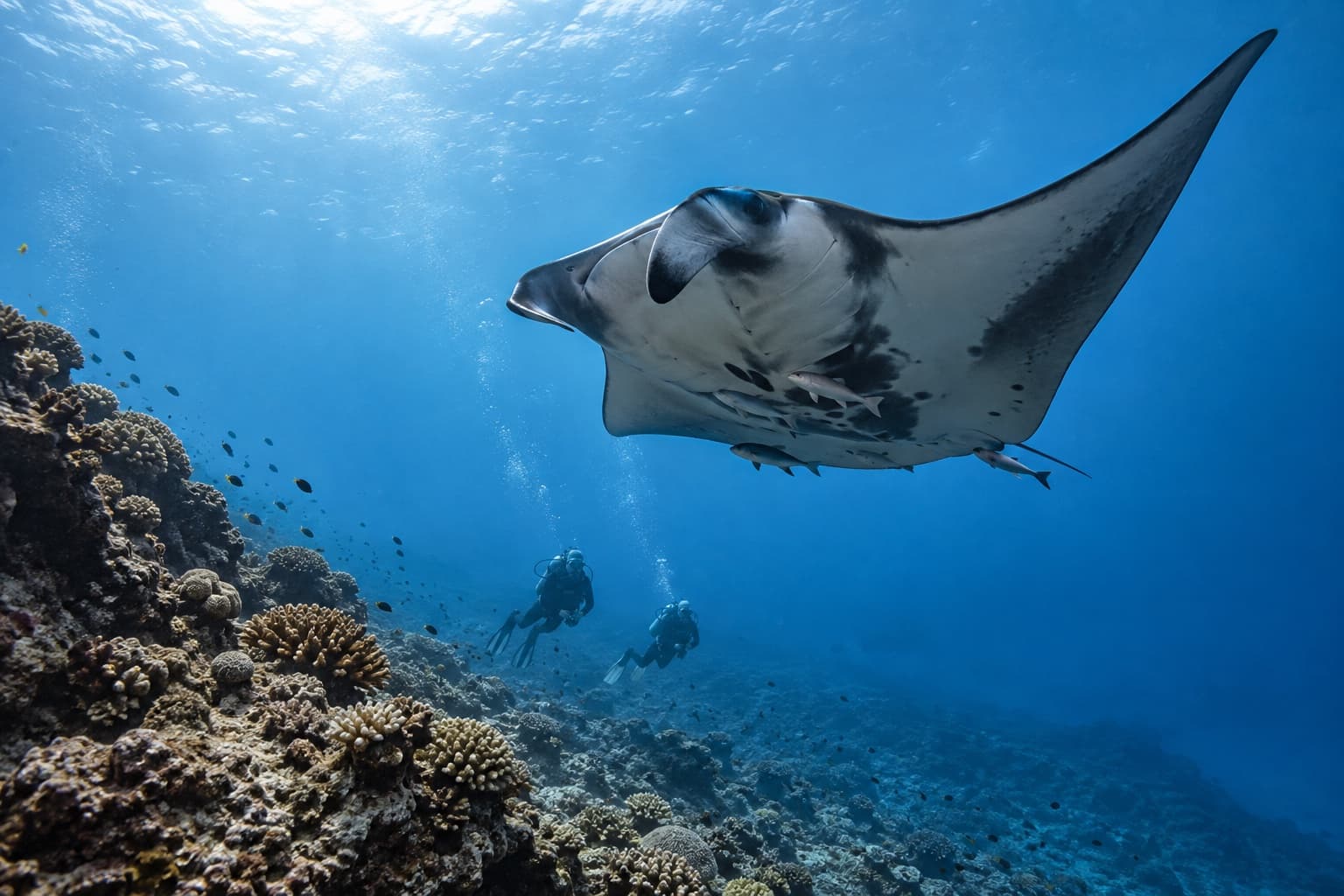
Mantas and eagle rays.
Seals, sea lions and whales.
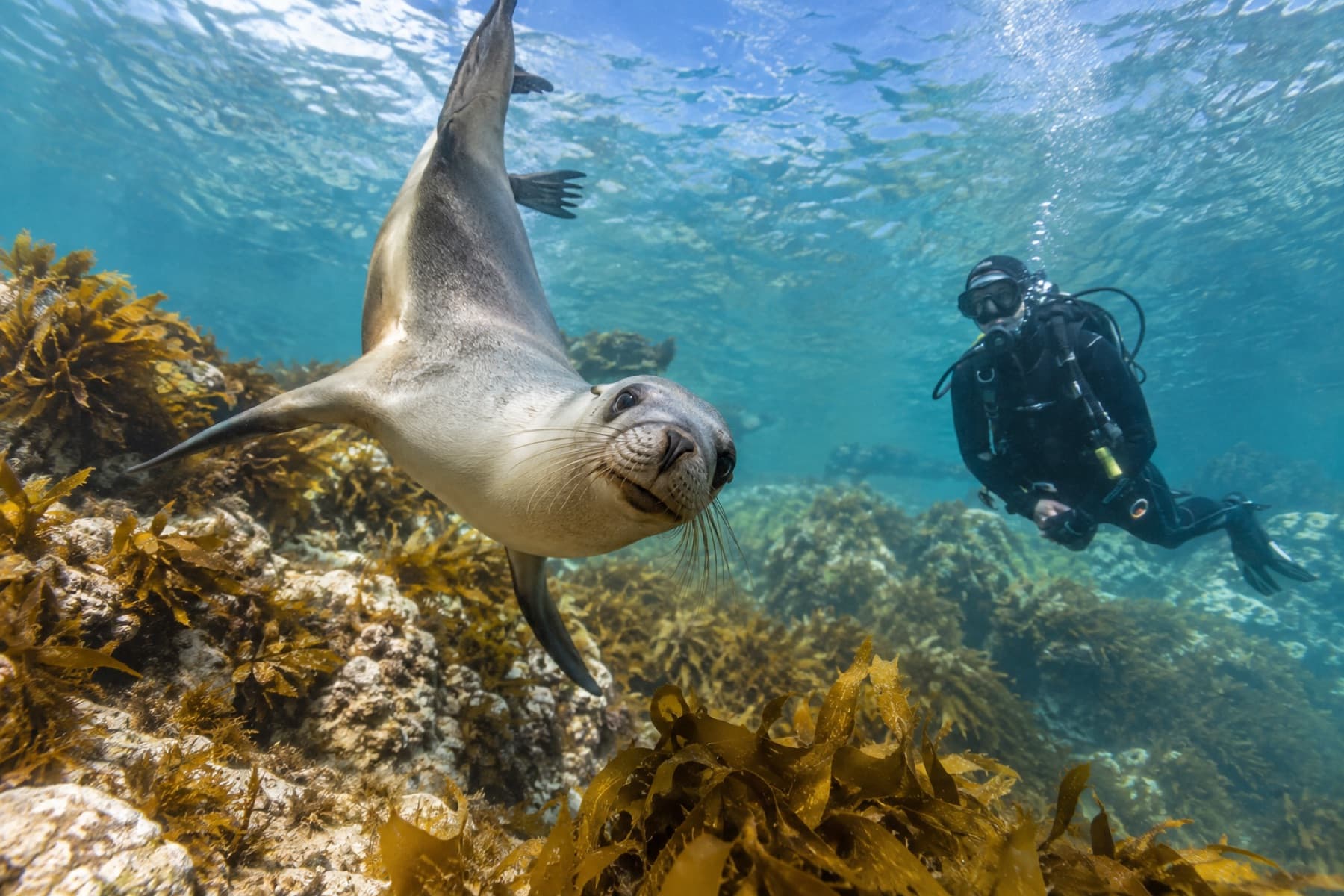 Australian & New Zealand Fur SealsFast, acrobatic and endlessly curious — the highlight of Montague Island, Jervis Bay and Port Phillip.Australian Sea LionEndangered, endemic, and among the most genuinely playful animals a diver can meet.
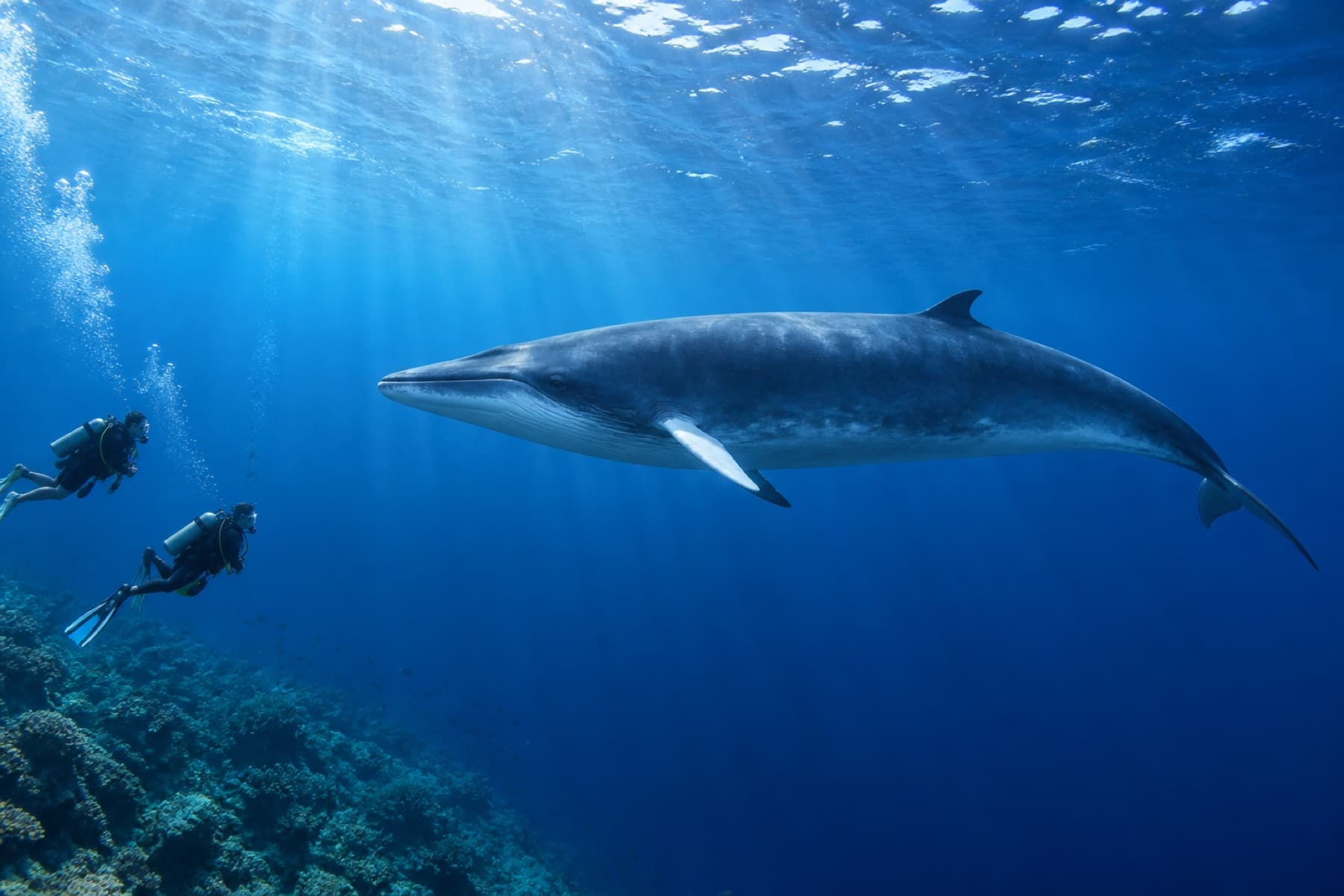 Dwarf Minke WhaleCurious whales that approach snorkellers on the northern Ribbon Reefs each winter — a genuinely rare permitted interaction.Humpback WhaleHeard far more often than seen — the soundtrack to winter diving on both Australian coasts.
Green and loggerhead turtles.
Seadragons, gropers, cod and syngnathids.
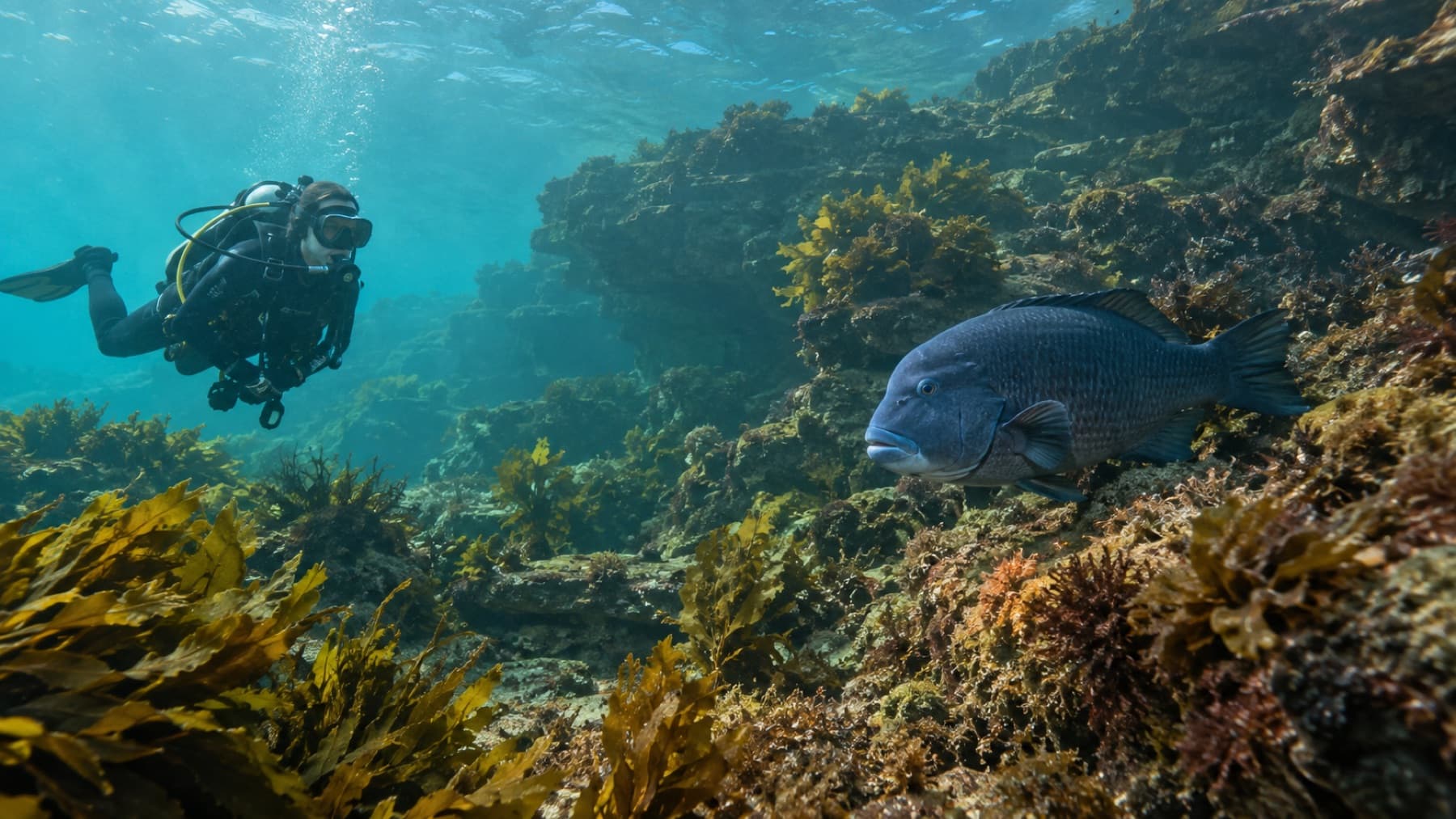 Eastern Blue GroperNew South Wales' state fish — large, inquisitive and often the first thing to greet a Sydney shore diver.
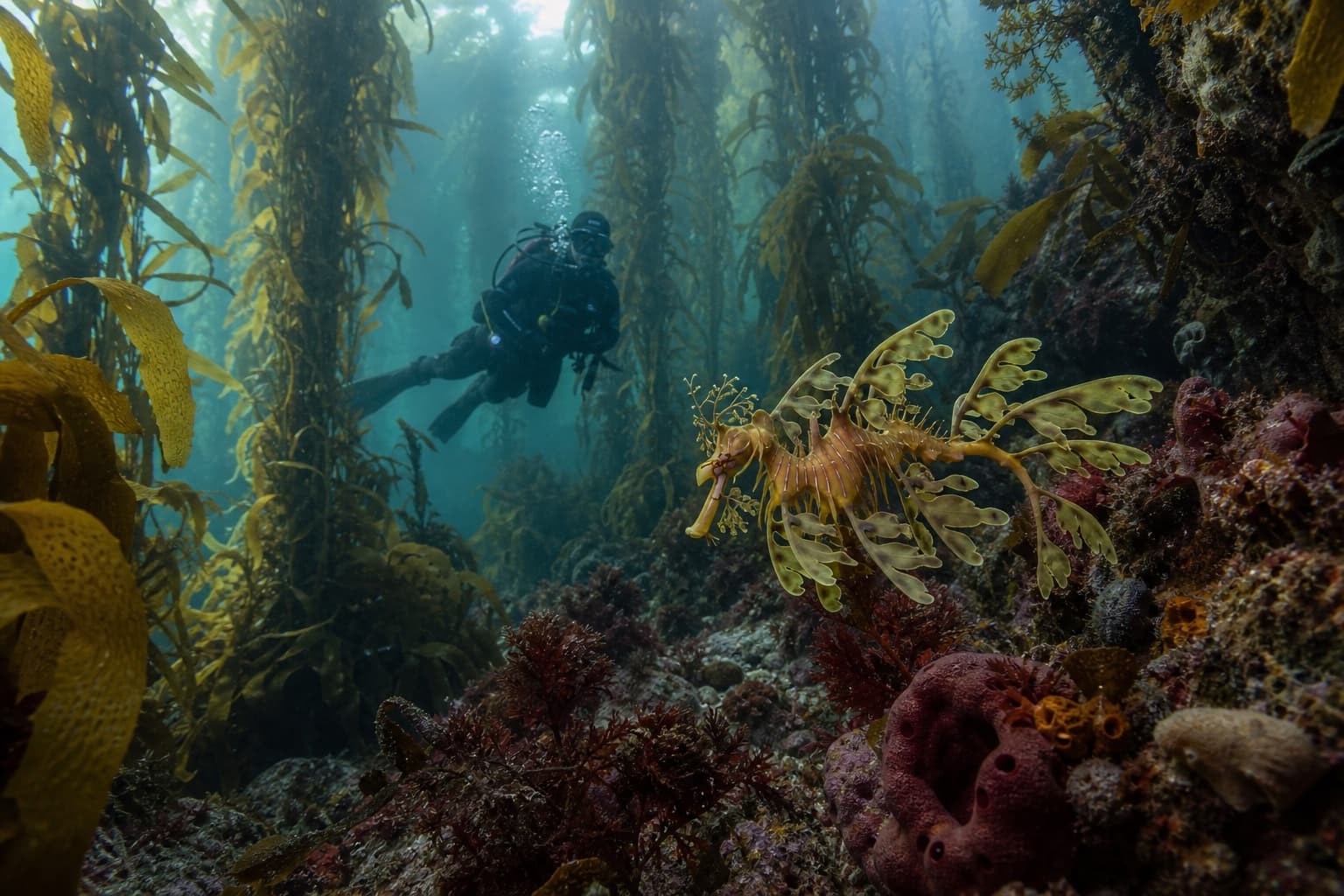 Leafy SeadragonSouth Australia's emblem and the most elaborately camouflaged fish in the world.
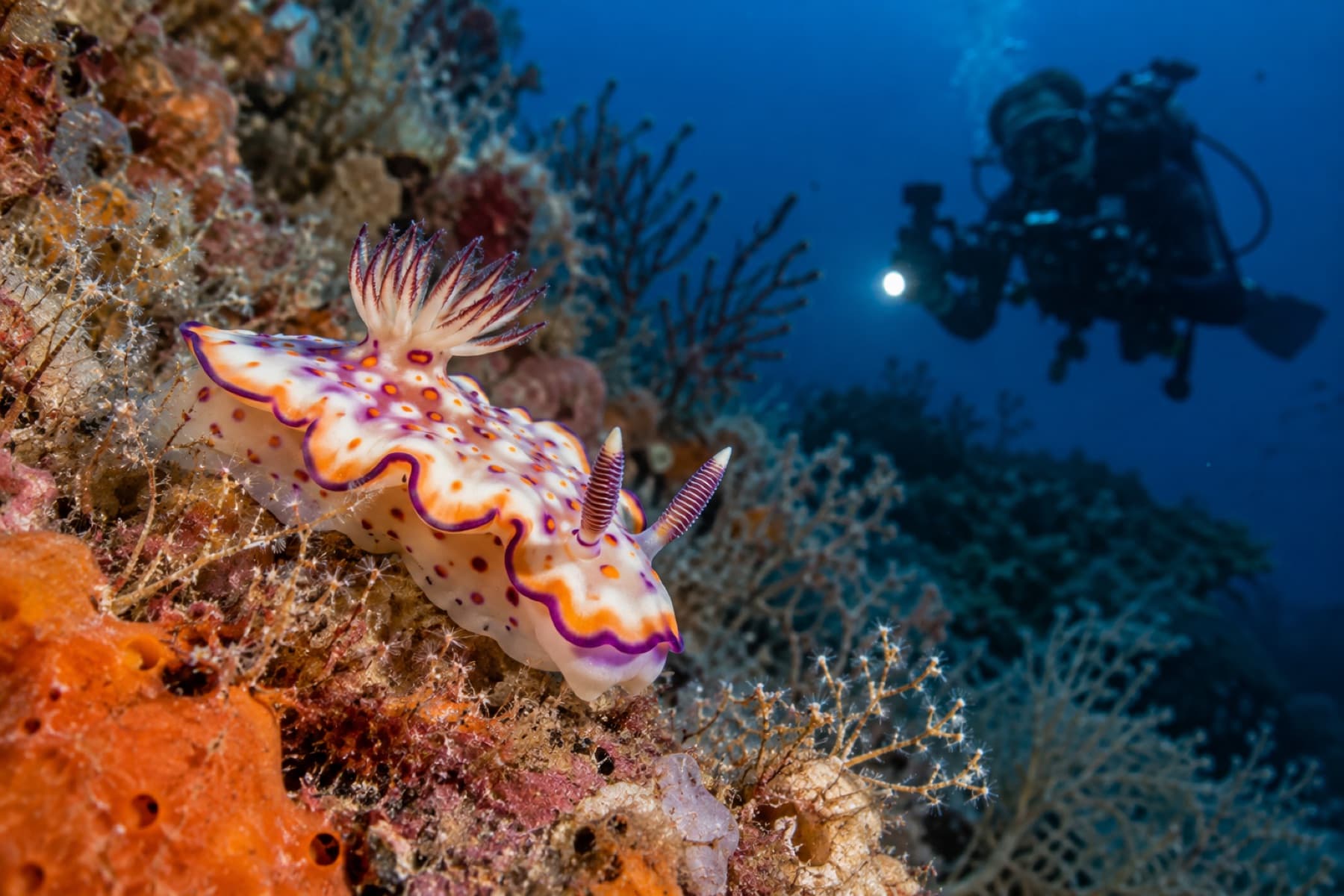 Potato CodEnormous, docile groupers habituated to divers at Cod Hole on the Ribbon Reefs.Queensland GroperThe largest reef-dwelling bony fish in the world, and a defining feature of the SS Yongala.Seahorses & PipefishCryptic, slow and protected — jetty piles and sponge gardens are where to look.
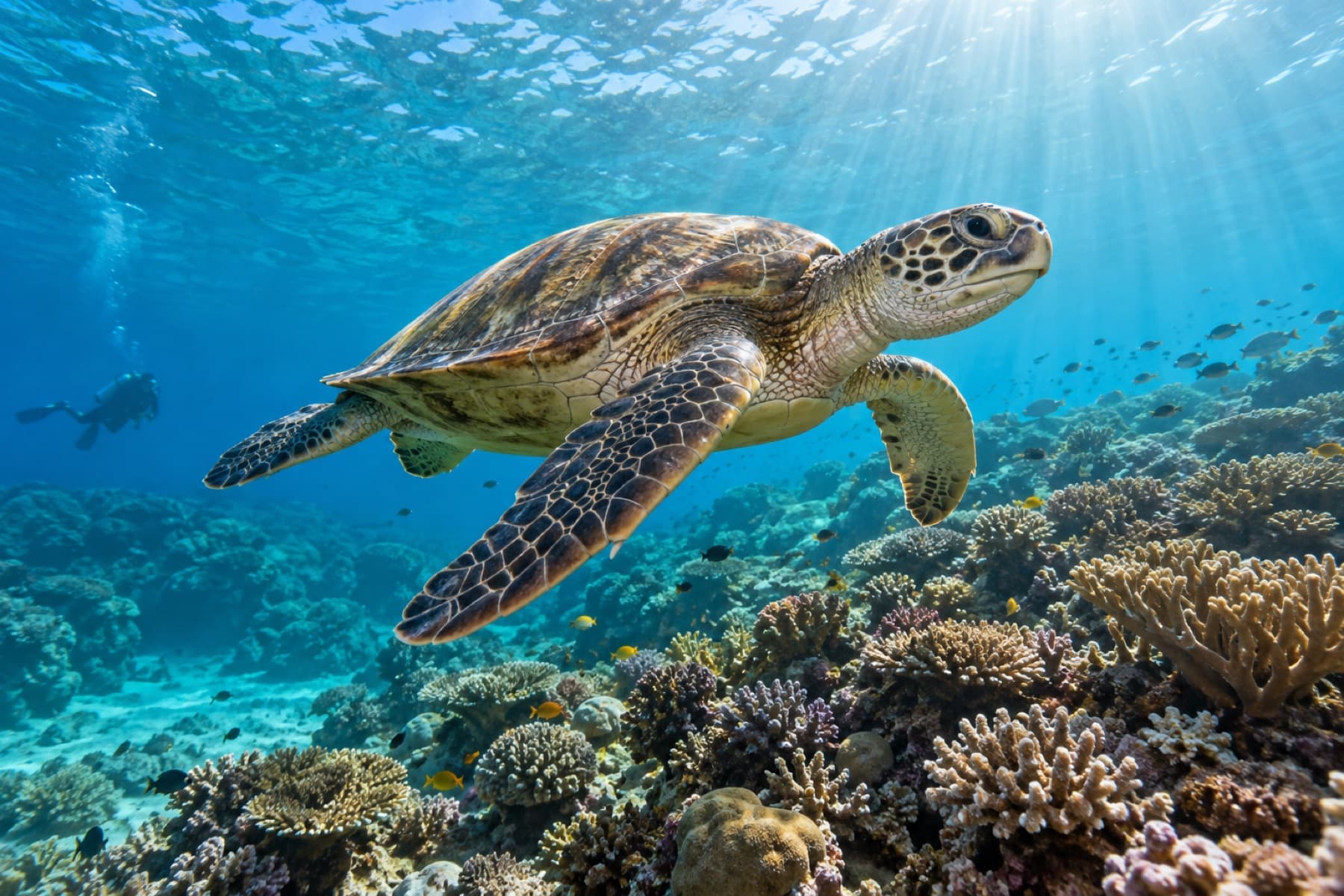 Spotted HandfishA critically endangered Tasmanian fish that walks on its fins and lives almost nowhere.
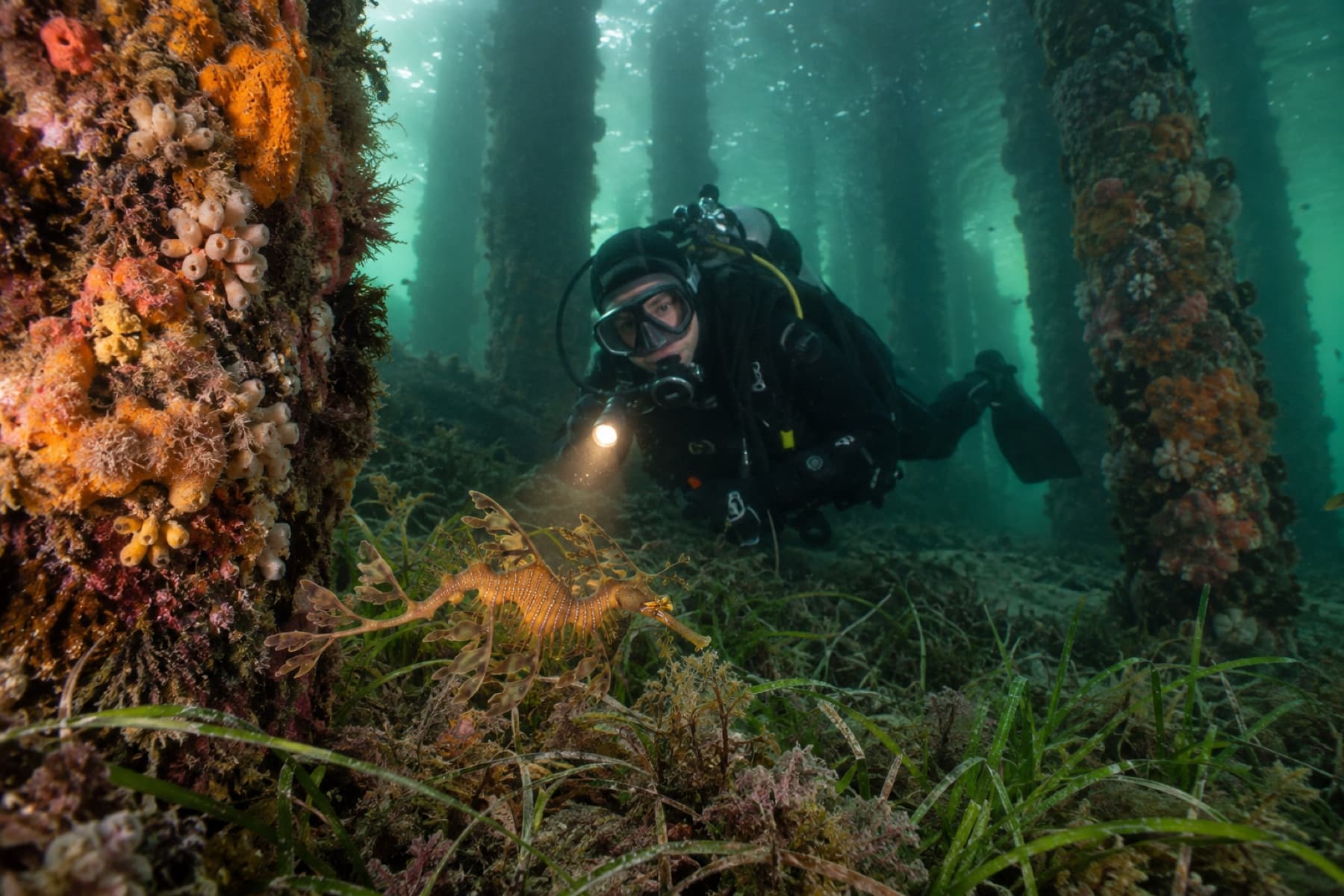 Weedy SeadragonThe leafy's more widespread cousin — the signature animal of Sydney and Victorian shore diving.
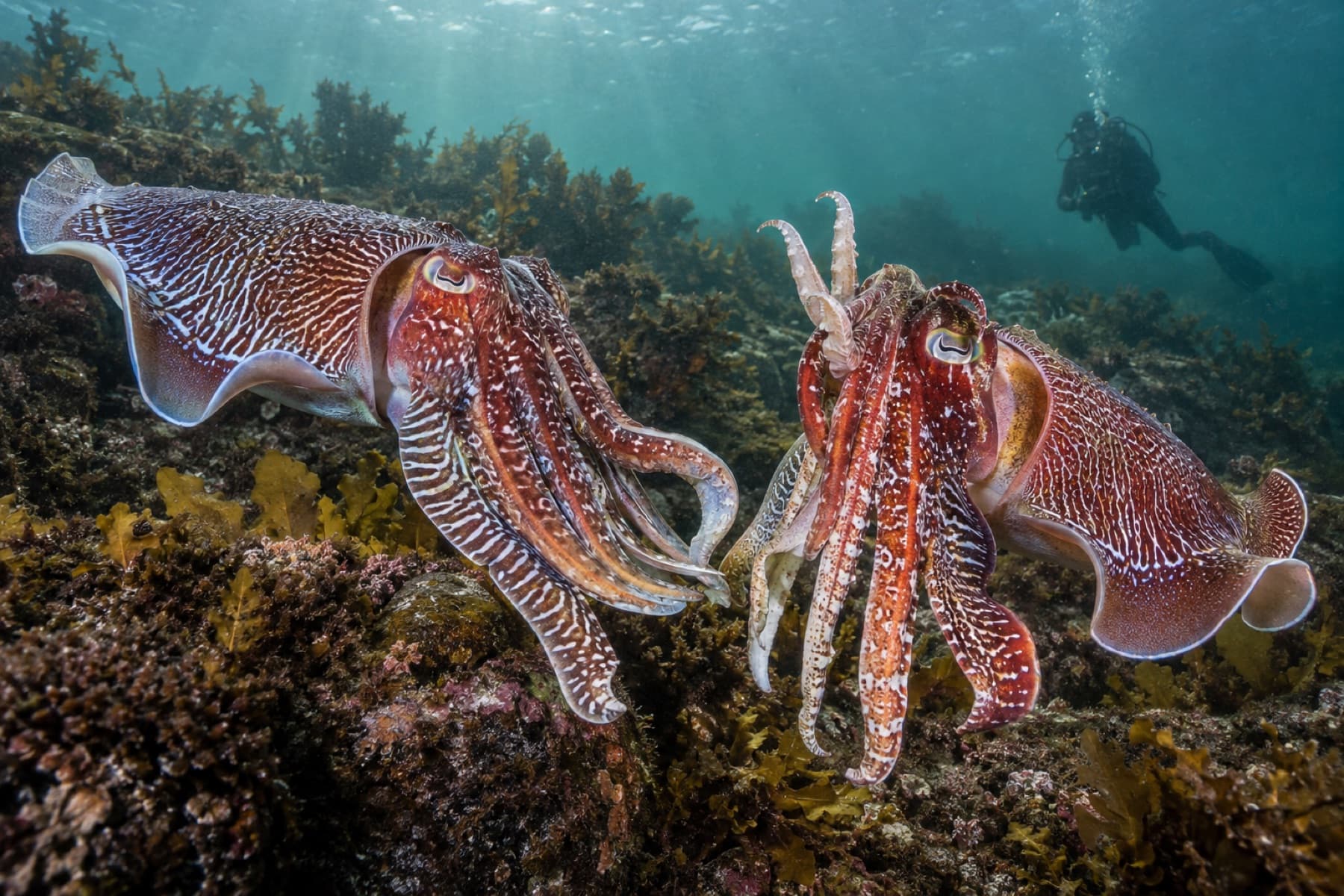
Cuttlefish and squid.
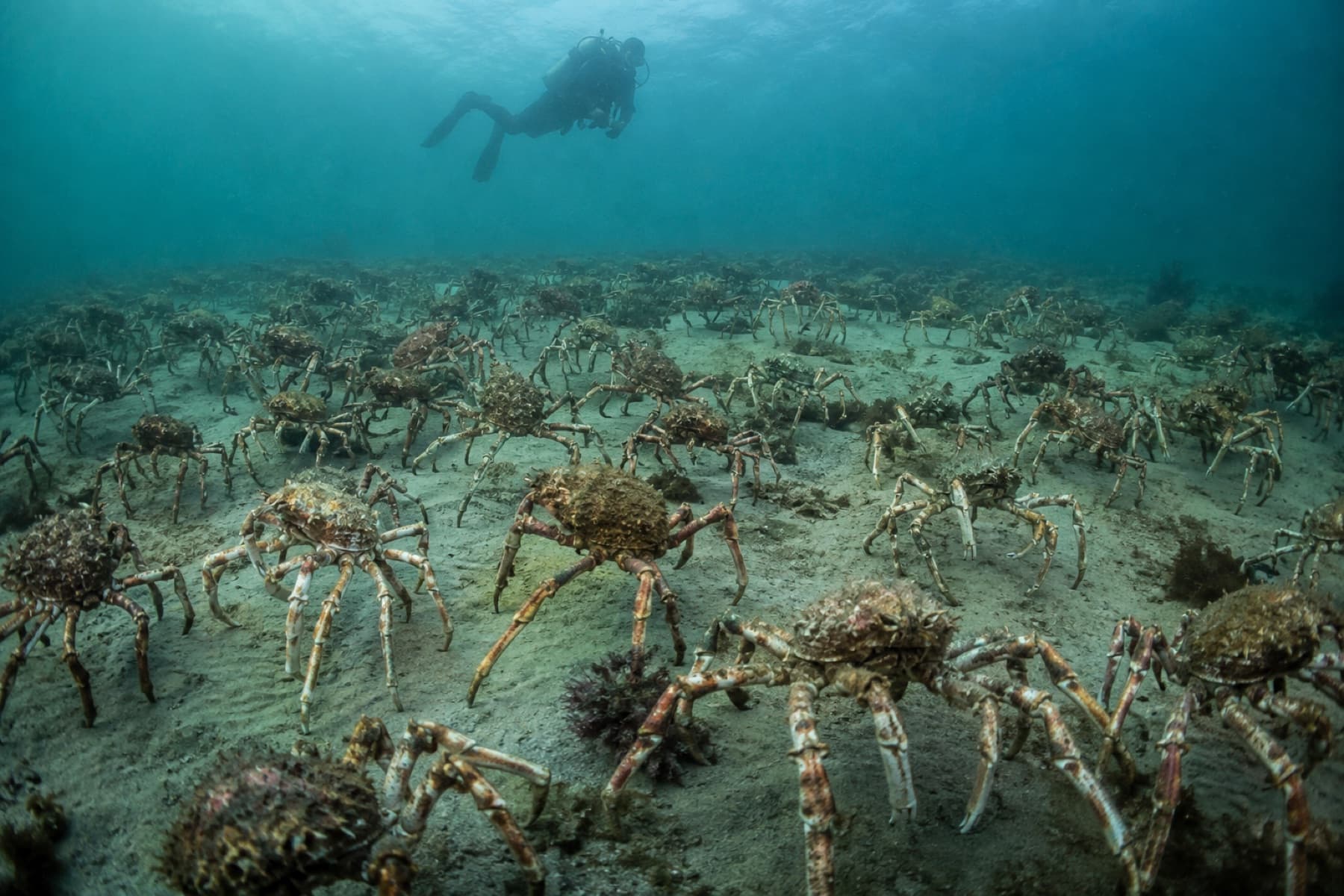
Nudibranchs and crustaceans.
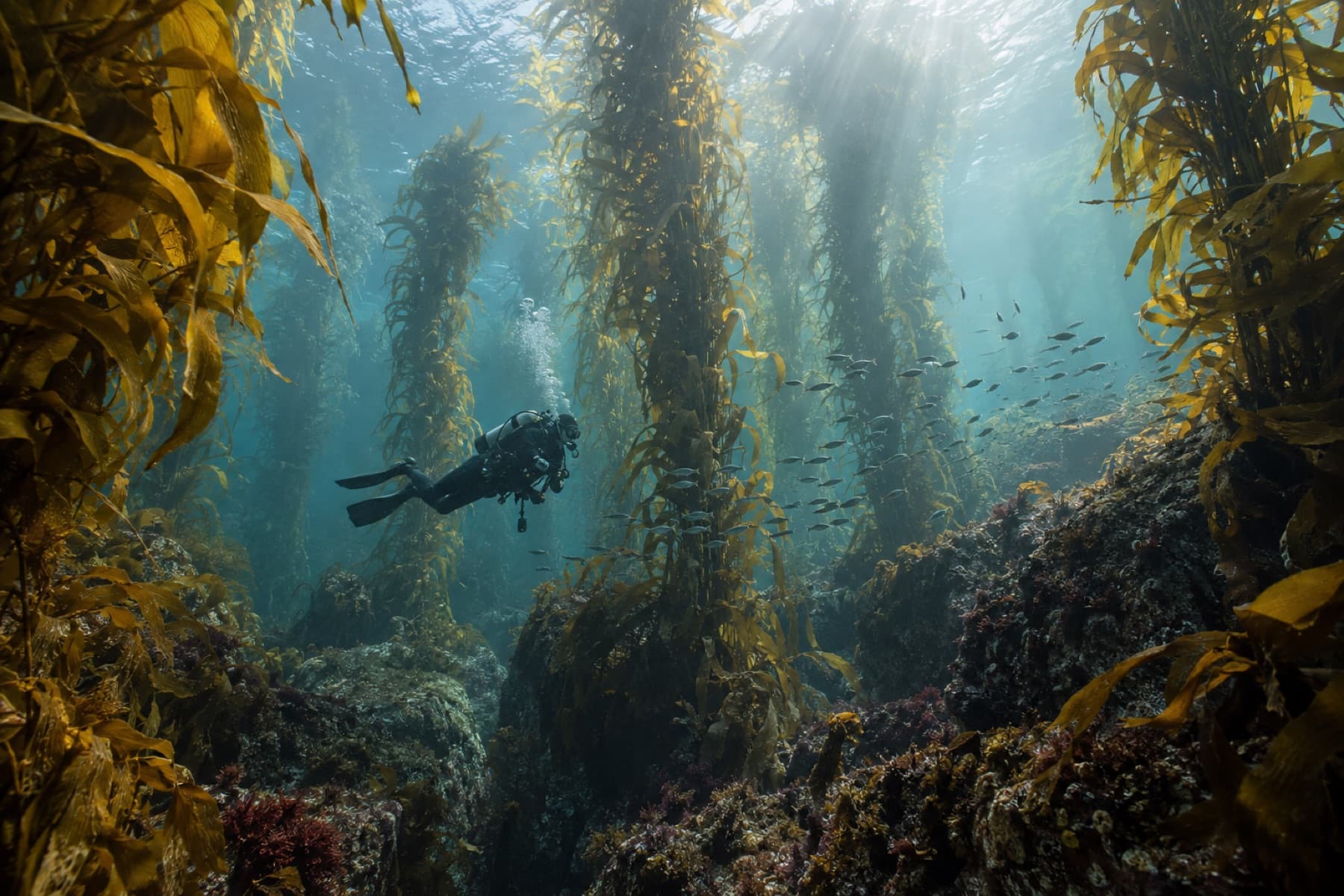
Kelp forest and other defining habitats.
The headline species, by month. Full detail and site lists are on each species page.
Dwarf Minke Whale
Giant Australian Cuttlefish
Giant Spider Crab
Grey Nurse Shark
Humpback Whale
Leopard Shark (Zebra Shark)
Manta Ray
Whale Shark
Planning around a species
If you are choosing dates rather than a destination, start at when to dive in Australia — it works month by month across the whole country.