Marine life
Australian Sea Lion
Neophoca cinerea
Endangered, endemic, and among the most genuinely playful animals a diver can meet.
Australian sea lions are found nowhere else on earth, and encounters with them at Port Lincoln and in the Recherche Archipelago are regularly described as the best in-water experience in Australian waters.
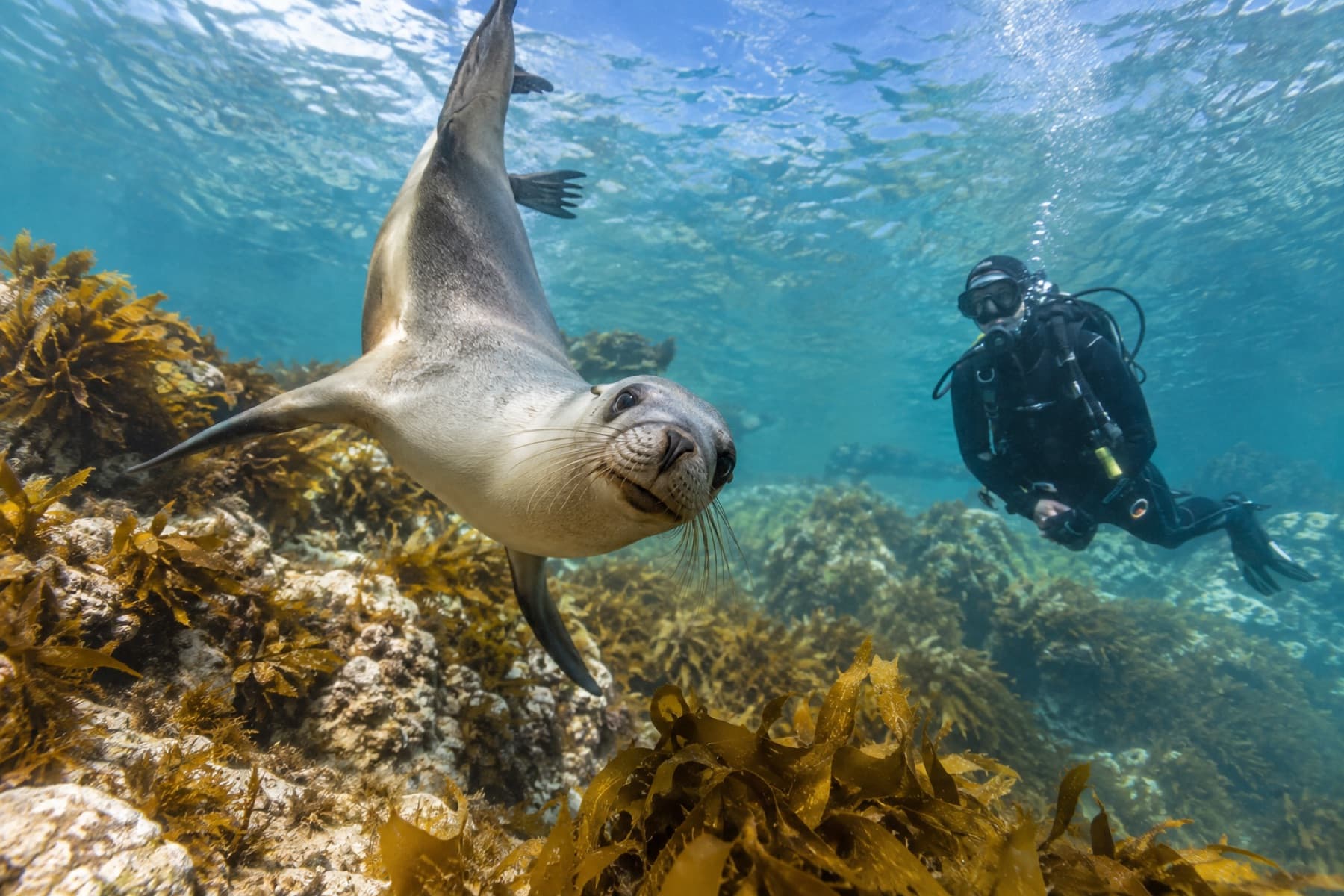
Young animals in particular are openly curious and genuinely playful — they will approach divers, mirror their movements, blow bubbles and repeatedly loop back for more. The encounter is on their terms, which is exactly what makes it good.
They are endangered, with a small and slowly declining population, and interactions are managed accordingly.
| Scientific name | Neophoca cinerea |
|---|---|
| Typical size | Females around 1.8 m, males to 2.5 m |
| Conservation status | Endangered |
| Peak months | Year-round |
| Documented sites | 3 |
| States | South Australia, Western Australia |
- pale creamy or silver-grey coat; adult males darker with a pale mane
- external ear flaps, unlike true seals
- walks on all fours on land, rotating the hind flippers forward
- large forward-facing eyes
- Juveniles are highly interactive and initiate most encounters.
- Rests and breeds on island beaches and rock shelves.
- Forages on the seabed, often at considerable depth.
In-water etiquette
Australian Sea Lion is endangered. How divers behave around it genuinely matters.
- Let the animals approach you — never swim toward or pursue.
- Stay clear of haul-out beaches and breeding areas.
- Give adult males a wide berth, particularly in breeding season.
- Do not touch, even when an animal makes contact first.
Where to see them
Sites where this species is documented as a reliable encounter.
Operators servicing those sites
Businesses documented as diving the sites above. Confirm seasonality and requirements directly.
Frequently asked questions
Where can I dive with sea lions in Australia?
Port Lincoln in South Australia is the best-known destination, with the Recherche Archipelago off Esperance and the Abrolhos Islands also supporting colonies.
Is it safe?
Encounters with juveniles are generally benign and highly interactive. Adult males should be given space, particularly during breeding season, and operators brief accordingly.
Last researched: September 2026. Dive businesses change frequently — confirm current services, prices and requirements directly with the operator before booking.