Marine life
Nudibranchs
Nudibranchia
Sea slugs of absurd colour and variety — the reason temperate Australian macro diving has a global reputation.
Nudibranchs are shell-less marine molluscs, and they are the single biggest reason Australian temperate macro sites have an international reputation among photographers.
Nelson Bay's Fly Point, Bare Island in Sydney and Edithburgh in South Australia hold extraordinary diversity — dozens of species on a single dive for anyone prepared to search slowly.
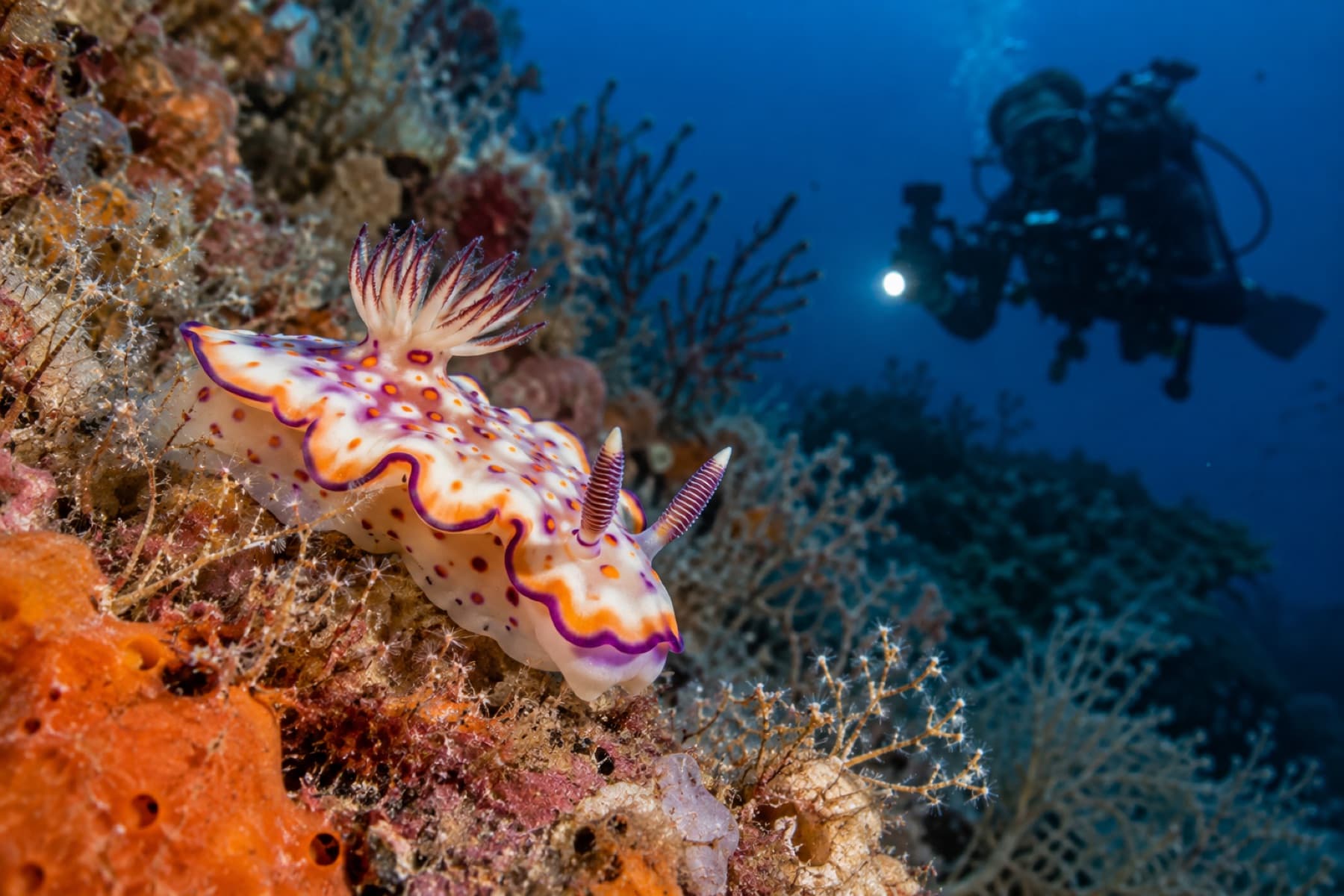
Their colours are honest advertising. Most are toxic or unpalatable, many sequestering defensive chemicals from the sponges and hydroids they eat, and the brightness is a warning rather than camouflage.
| Scientific name | Nudibranchia |
|---|---|
| Typical size | Mostly 1–5 cm |
| Peak months | August, September, October |
| Documented sites | 10 |
| States | New South Wales, South Australia, Victoria, Western Australia |
- no shell in the adult stage
- paired rhinophores on the head — the sensory 'horns'
- many species carry exposed gills as a plume on the back
- extraordinary range of colour and form
- Grazes on sponges, hydroids, bryozoans and anemones depending on species.
- Many sequester defensive chemicals or stinging cells from their prey.
- Hermaphroditic; egg ribbons are often laid beside the food source.
Nudibranchs are found by slowing down almost to a stop. Work sponge gardens, hydroid growth and jetty piles systematically rather than covering ground.
Egg ribbons are a useful cue — a spiral ribbon on a sponge usually means the animal that laid it is within a few centimetres.
In-water etiquette
How divers behave around this species affects both the animal and everyone else's encounter.
- Do not handle or reposition for photographs.
- Excellent buoyancy is essential — these are silty sites and a careless fin ends visibility for everyone.
- Limit strobe firing per animal.
Where to see them
Sites where this species is documented as a reliable encounter.
Operators servicing those sites
Businesses documented as diving the sites above. Confirm seasonality and requirements directly.
Often seen on the same dives
Frequently asked questions
Where is the best nudibranch diving in Australia?
Nelson Bay's Fly Point, Bare Island in Sydney and Edithburgh in South Australia are the standouts, all shore dives.
Are nudibranchs dangerous to touch?
Many are toxic or carry stinging cells sequestered from their prey. They should not be handled, for their sake and yours.
Last researched: September 2026. Dive businesses change frequently — confirm current services, prices and requirements directly with the operator before booking.