Australian diving guide
How to Plan Your First Australian Dive Trip
A practical sequence for choosing the region, season, operator, equipment and backup days for an Australian diving holiday.
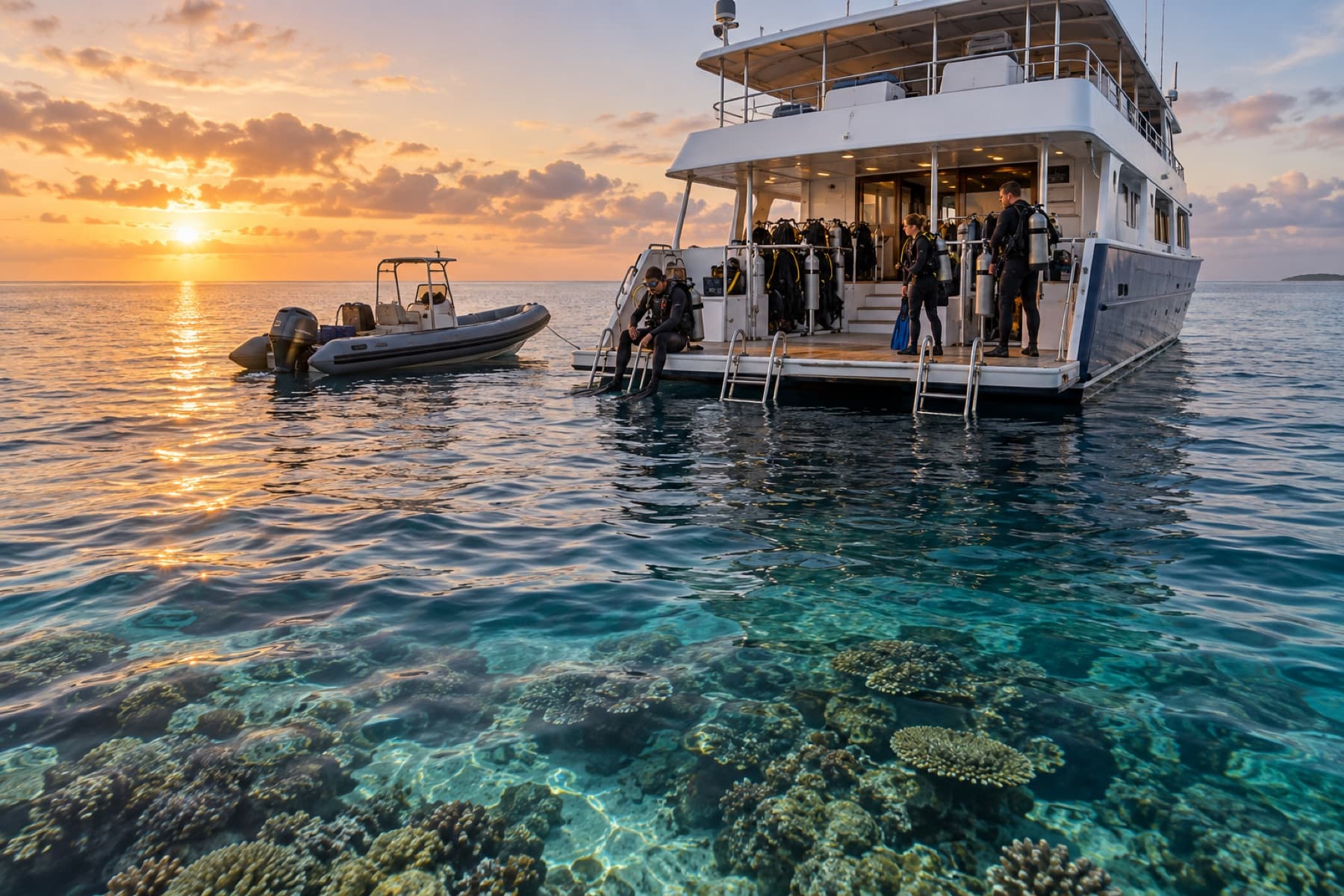
Australia is a continent, not a single dive destination. A trip that tries to combine Cairns, Ningaloo and Sydney can lose more time in airports than it gains underwater.
A better first trip starts with one desired experience, one realistic region and enough flexibility for weather. This is the planning sequence that avoids the most common expensive mistakes.
Decide whether the priority is coral, a particular animal, wrecks, shore diving, photography or training. That choice immediately narrows the right coast and season.
- coral and liveaboards: tropical Queensland
- whale sharks and mantas: Ningaloo
- grey nurse sharks: NSW and southeast Queensland
- seadragons and jetties: southern states
- wrecks and technical terrain: Victoria, Tasmania and selected regional sites
Marine life follows biological seasons, while visibility and sea conditions follow weather patterns. Read both the month page and the species page before booking flights.
- separate peak wildlife months from generally good diving months
- allow for wet-season or cyclone disruption in the tropical north
- expect colder water where the wildlife event demands it
- never treat a sighting as guaranteed
Certification level is only a shorthand. Operators also care about recency, total dives, current experience, buoyancy, gas consumption and familiarity with the equipment being used.
- tell the operator when and where you last dived
- ask which route is planned
- confirm maximum depth and current
- book an orientation dive when changing environment or exposure protection
Australian advertised prices do not always include the same things. Compare like with like before deciding an operator is expensive or cheap.
- equipment hire and computer
- marine-park or reef levies
- guide service
- Nitrox
- transfers, meals and accommodation
- cancellation or weather policy
Put the priority dives early in the trip and keep at least one weather-flexible day. Avoid flying immediately after the final dive and follow the conservative guidance provided by your operator and training agency.
Frequently asked questions
How many days should I allow for an Australian dive trip?
For one region, four to seven days provides a useful buffer around two or more diving days. Remote or highly weather-dependent destinations deserve longer.
Should I bring all my own equipment?
Bring personal fit-critical items if practical, particularly mask and computer. Confirm cylinder, weights and exposure protection with the operator because baggage costs can outweigh rental savings.
How far ahead should I book?
Book early for liveaboards, island stays and short seasonal wildlife windows. Ordinary local shore or charter diving may allow more flexibility outside holiday periods.