Australian diving guide
Best Diving in Australia: Where to Go and Why
Australia's best diving is not one reef — it is a choice between tropical coral, big animals, temperate oddities, wrecks, caves and exceptional shore dives.
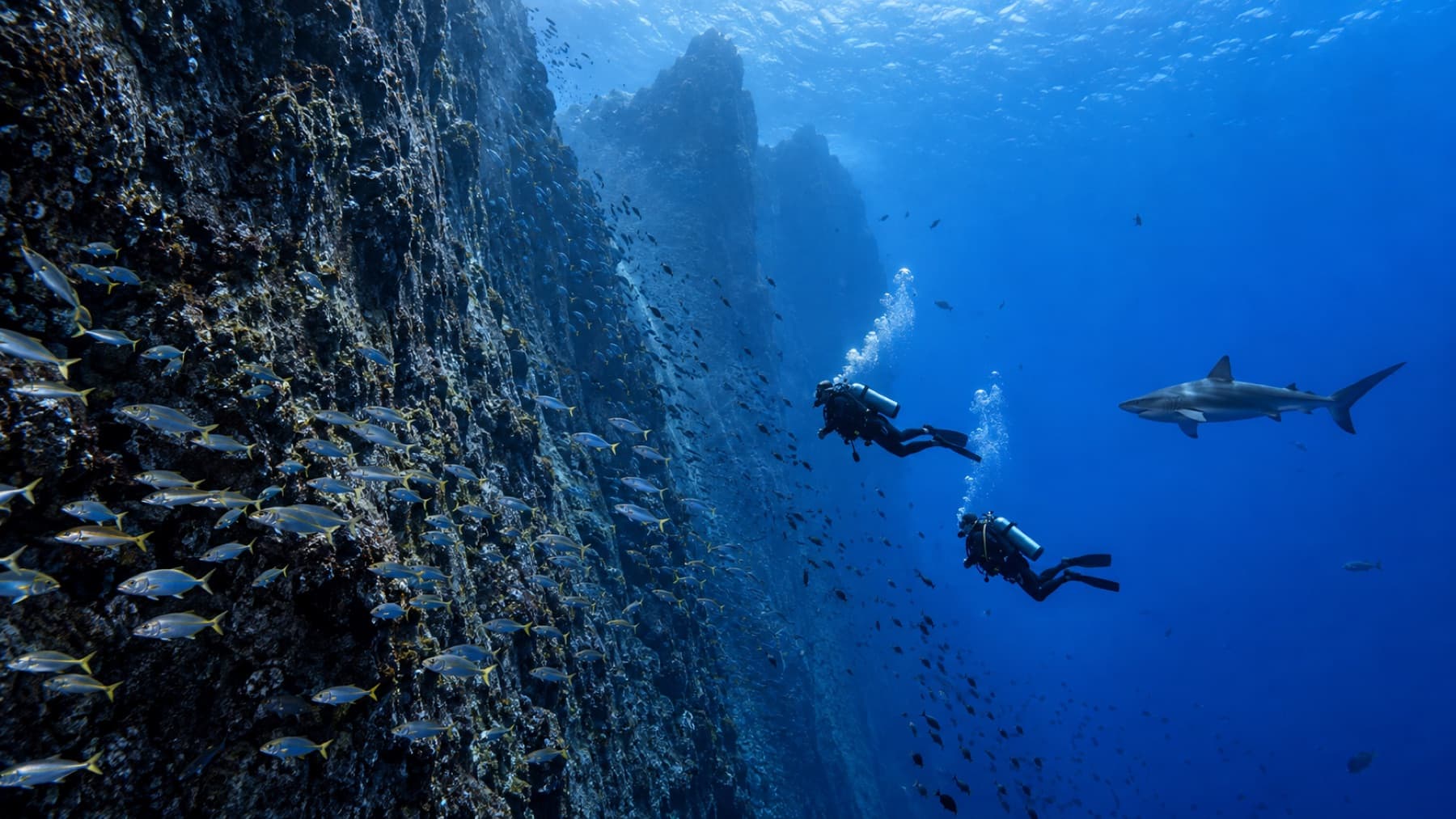
There is no honest single answer to where is the best diving in Australia? The answer changes with the experience you want: tropical coral, whale sharks, cold-water wildlife, historic wrecks, caves, easy shore access or challenging technical terrain.
This guide narrows the country by diving style. It is designed to help you choose a region first, then move into the detailed site and operator pages needed to plan a realistic trip.
Queensland carries the greatest concentration of coral-reef diving, from day boats out of Cairns and Port Douglas to liveaboards reaching the Ribbon Reefs and Coral Sea. The right choice depends on whether convenience, reef quality, number of dives or outer-reef access matters most.
- Cairns and Port Douglas for the widest operator choice
- the Ribbon Reefs for multi-day liveaboard itineraries
- Townsville for the SS Yongala
- Lady Elliot and Heron Island for island-based diving and marine life
Ningaloo is the headline destination for whale sharks and manta rays, while the east coast offers grey nurse sharks, leopard sharks, turtles and seasonal humpback encounters. These experiences are seasonal, and choosing the month is as important as choosing the destination.
- Ningaloo for whale sharks and manta rays
- South West Rocks and southeast Queensland for grey nurse sharks
- Julian Rocks for seasonal sharks and rays
- the Ribbon Reefs for dwarf minke whales
Southern Australia is the country's most underestimated diving region. Kelp forests, sponge gardens, seadragons, giant cuttlefish, spider crabs and dense pier life create dives that look nothing like the tropical north.
- South Australia for leafy seadragons and giant cuttlefish
- Victoria for piers, seadragons and Port Phillip wrecks
- Tasmania for kelp, walls, caves and cool-water clarity
- Sydney for accessible year-round temperate shore diving
The SS Yongala is Australia's best-known wreck, but the deeper technical field is concentrated around Victoria, Tasmania and South Australia's freshwater cave country. Training, gas and equipment support must be checked separately from access to the site.
- SS Yongala for a marine-life-covered recreational wreck
- Port Phillip's Ships' Graveyard for wreck variety
- Tasmania for deeper wreck and wall diving
- Mount Gambier for trained cave divers
Choose the experience before the airport. Then check water temperature, seasonal wildlife, likely visibility, access method, minimum experience and how many weather days the itinerary can absorb.
Frequently asked questions
What is the best place to scuba dive in Australia?
For broad tropical reef choice, Cairns and Port Douglas are the easiest starting points. Ningaloo is stronger for specific large-animal encounters, while southern states offer Australia's most distinctive temperate diving.
Is the Great Barrier Reef the only major dive destination?
No. Ningaloo, Lord Howe Island, Sydney, the NSW north coast, Port Phillip, South Australia and Tasmania all support trips with a completely different character.
Can beginners dive Australia's best sites?
Many can, but not every route at every site is suitable. Use the difficulty, depth and access information on each site page and discuss recent experience with the operator.