Brisbane & Moreton Bay · Queensland
Tangalooma Wrecks
Fifteen deliberately scuttled vessels in shallow, sheltered water off Moreton Island.
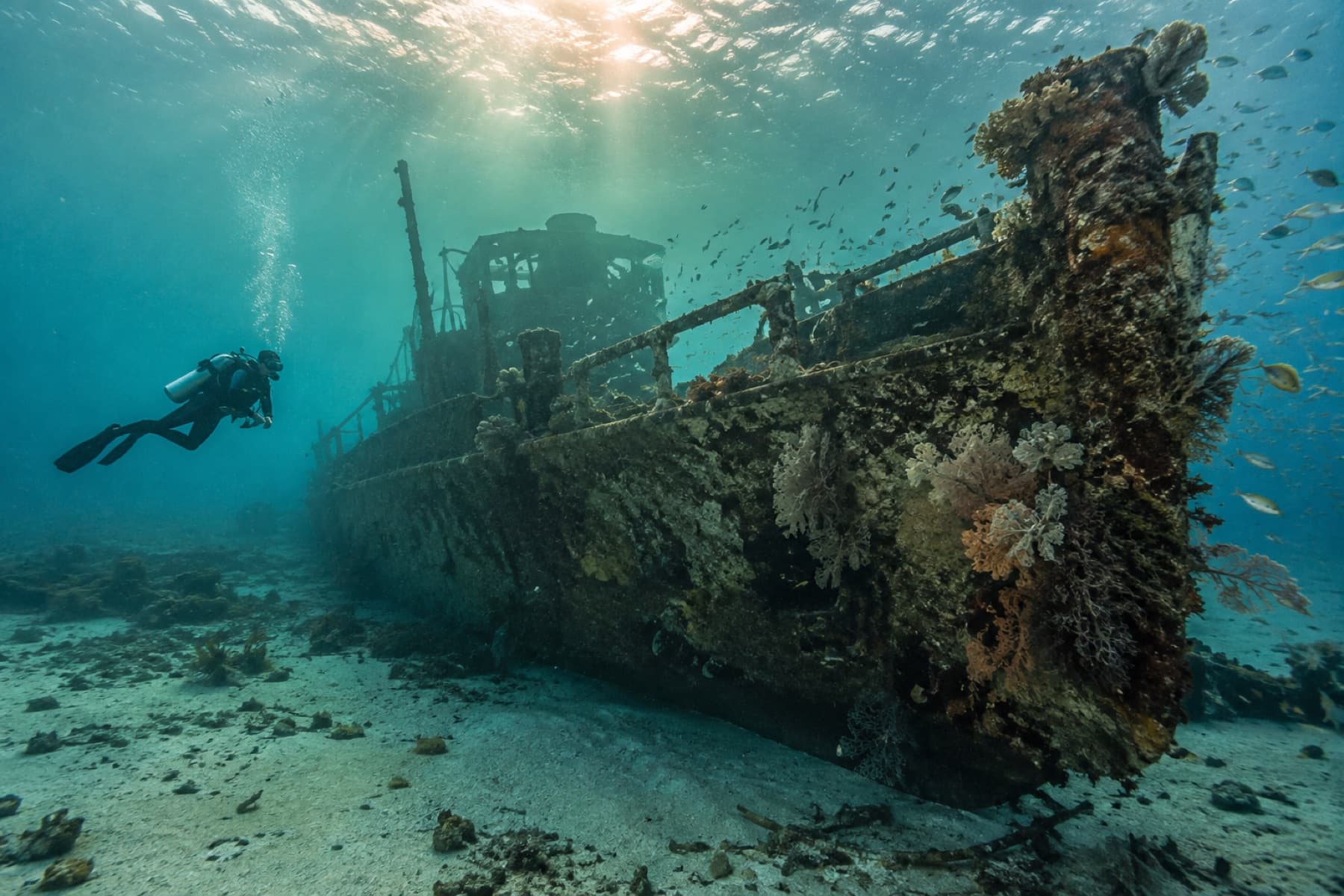
The Tangalooma Wrecks are a line of fifteen vessels deliberately sunk off Moreton Island in the 1960s to create a sheltered boat anchorage, which incidentally produced an excellent shallow dive site.
The wrecks sit in only a few metres of water and have become a dense artificial reef, accessible to snorkellers as well as divers.
Current runs on the tide and is the main planning consideration; slack water is strongly preferred.
Max depth
10 m
typically 6 m
Access
shore & boat
Current
tide-dependent
tide sensitive
Water temp
19–26°C
Level
beginner
| Region | Brisbane & Moreton Bay |
|---|---|
| State | Queensland |
| Access | shore and boat |
| Site type | wreck, reef |
| Minimum depth | 2 m |
| Typical depth | 6 m |
| Maximum depth | 10 m |
| Current | tide-dependent |
| Tide sensitive | Yes |
| Visibility | Commonly 3–12 m |
| Water temperature | Roughly 19–26°C |
| Experience level | beginner |
These are guidance categories, not guarantees. Conditions on the day, and an operator’s own requirements, override any classification here.
- wobbegongs
- trevally and kingfish schools
- rays
- turtles
- soft coral on the structures
- tropical reef fish
Access
- Shore-accessible from Tangalooma, or by boat from Brisbane.
- Slack water strongly preferred.
- Very shallow throughout.
Hazards
- current on the tide
- boat traffic
- sharp structure on the wrecks
- entanglement
What you might see here
Species documented at this site, with seasonality and etiquette on each page.
Operators servicing this site
Businesses documented as regularly diving this site. Only operators we have established a connection for are listed.
Training that is genuinely useful here
Not a list of everything available — the qualifications that actually change what you can do at this site.
Related dive sites
Worth reading alongside this one.
Dive sites nearby
Other documented sites within range, nearest first — useful for building a trip rather than a single dive.
Other dive businesses in the area
Not documented as servicing this site, but close enough to be useful for fills, hire or advice.
Frequently asked questions
How deep is Tangalooma Wrecks?
Depths range from around 2 metres to roughly 10 metres, with a typical profile around 6 metres. Conditions and route selection change this considerably.
Is Tangalooma Wrecks suitable for beginners?
It can be, in reasonable conditions and with appropriate supervision. Conditions on the day matter more than certification level, and operators may impose their own requirements.
How do you get to Tangalooma Wrecks?
Access is shore and boat based. Shore-accessible from Tangalooma, or by boat from Brisbane.
Is there current at Tangalooma Wrecks?
Current is recorded as tide-dependent. The site is tide sensitive, so timing matters and local knowledge is worth paying for. Conditions vary daily and should be checked close to the day.
What will I see at Tangalooma Wrecks?
Commonly reported marine life includes wobbegongs, trevally and kingfish schools, rays, turtles, soft coral on the structures, tropical reef fish. Sightings are never guaranteed.
When is the best time to dive Tangalooma Wrecks?
Conditions vary through the year. Visibility is commonly 3–12 m. Check with local operators close to your dates.
Where is Tangalooma Wrecks?
Tangalooma Wrecks is in the Brisbane & Moreton Bay region of Queensland.
Last researched: September 2026. Dive businesses change frequently — confirm current services, prices and requirements directly with the operator before booking.