Recreational training
Peak Performance Buoyancy
The short course with the biggest effect on how good a diver you actually are.
Buoyancy control is the skill that underpins everything else in diving, and most divers leave entry-level training with it barely established.
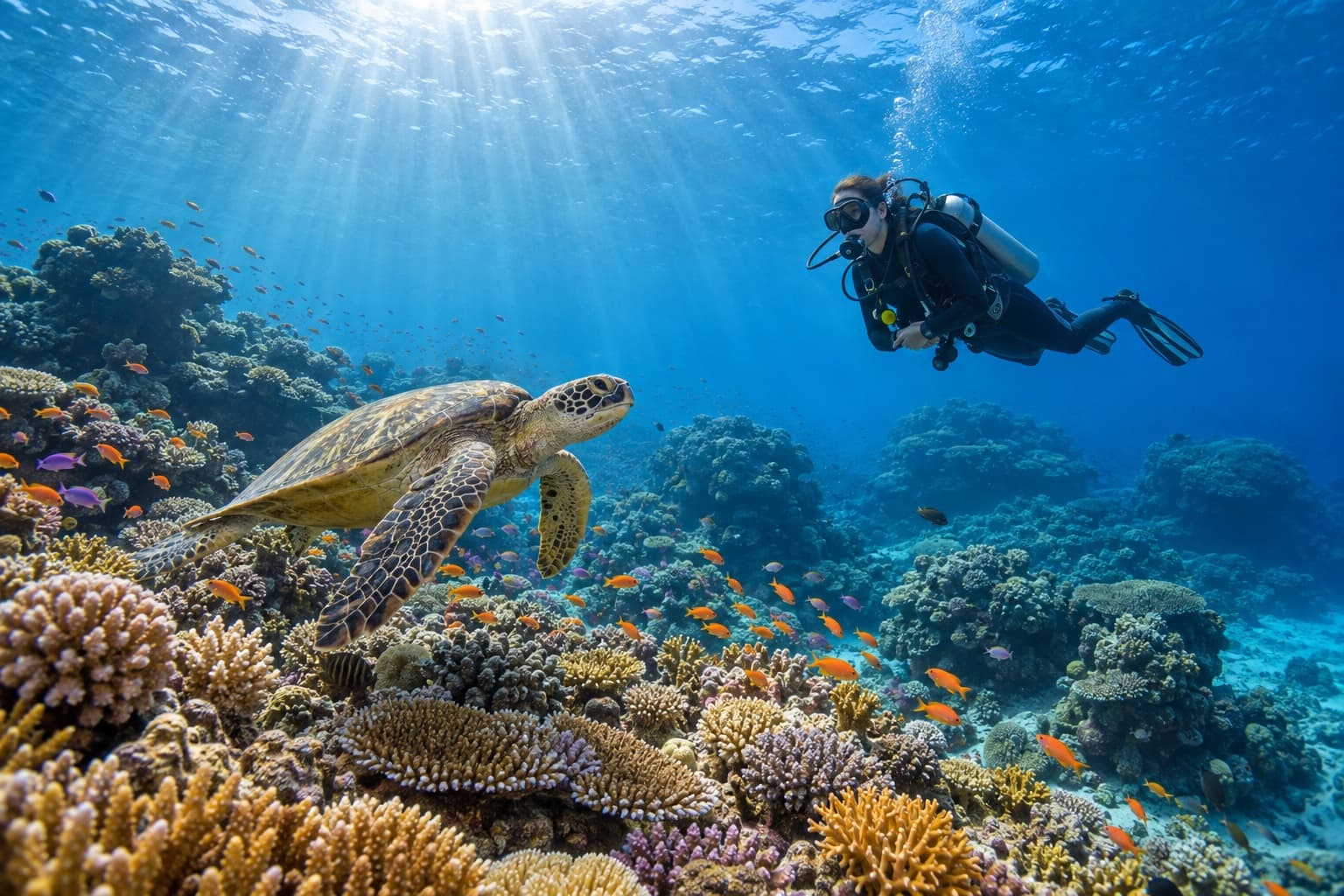
Good buoyancy means less gas consumed, less damage to the reef, better photographs, less silt disturbed and more capacity to notice what is around you rather than fighting your own position in the water.
It is a short, inexpensive specialty and almost universally the one experienced divers recommend doing earliest.
| Track | Recreational |
|---|---|
| Prerequisites | Open Water Diver certification |
| Agency equivalents | PADI: Peak Performance Buoyancy · SSI: Perfect Buoyancy · RAID: Performance Buoyancy |
- accurate weighting rather than habitual over-weighting
- weight distribution and trim
- hovering in a stable horizontal position
- breath control for fine buoyancy adjustment
- streamlining equipment
- finning techniques that do not disturb the bottom
Carrying excess weight forces a diver to compensate with extra air in the BCD, which makes buoyancy unstable and increases drag and gas consumption.
A properly weighted diver can hold a safety stop with a nearly empty cylinder without fighting. Getting to that point usually means removing several kilograms that were never needed.
Being neutrally buoyant while angled feet-down still means every fin stroke pushes water at the bottom, destroying visibility and damaging habitat.
Horizontal trim is what separates divers who can work a silty macro site without ruining it from divers who cannot.
Where this qualification matters in Australia
Sites where holding this certification genuinely changes what you can do — not a list of everywhere it is accepted.
Natural next steps
Courses that build directly on this one.
Courses that lead here
Agency versions of this course
The same qualification under different names. All are mutually recognised by operators.
Centres documented as offering this level of training
Businesses where the relevant capability is verified or advertised. Always confirm the specific course directly.
Frequently asked questions
Should I do this before Advanced Open Water?
Many instructors suggest it, and peak performance buoyancy can often be used as one of the Advanced course's elective dives.
Will it reduce my air consumption?
Usually significantly. Over-weighting, poor trim and constant corrections all waste gas, and fixing them is the fastest route to longer dives.
Is it worth it for experienced divers?
Often yes, particularly for divers who learned years ago and have never had their weighting properly reassessed.