Recreational training
Night Diver
Diving after dark, where familiar sites become completely different and nocturnal life emerges.
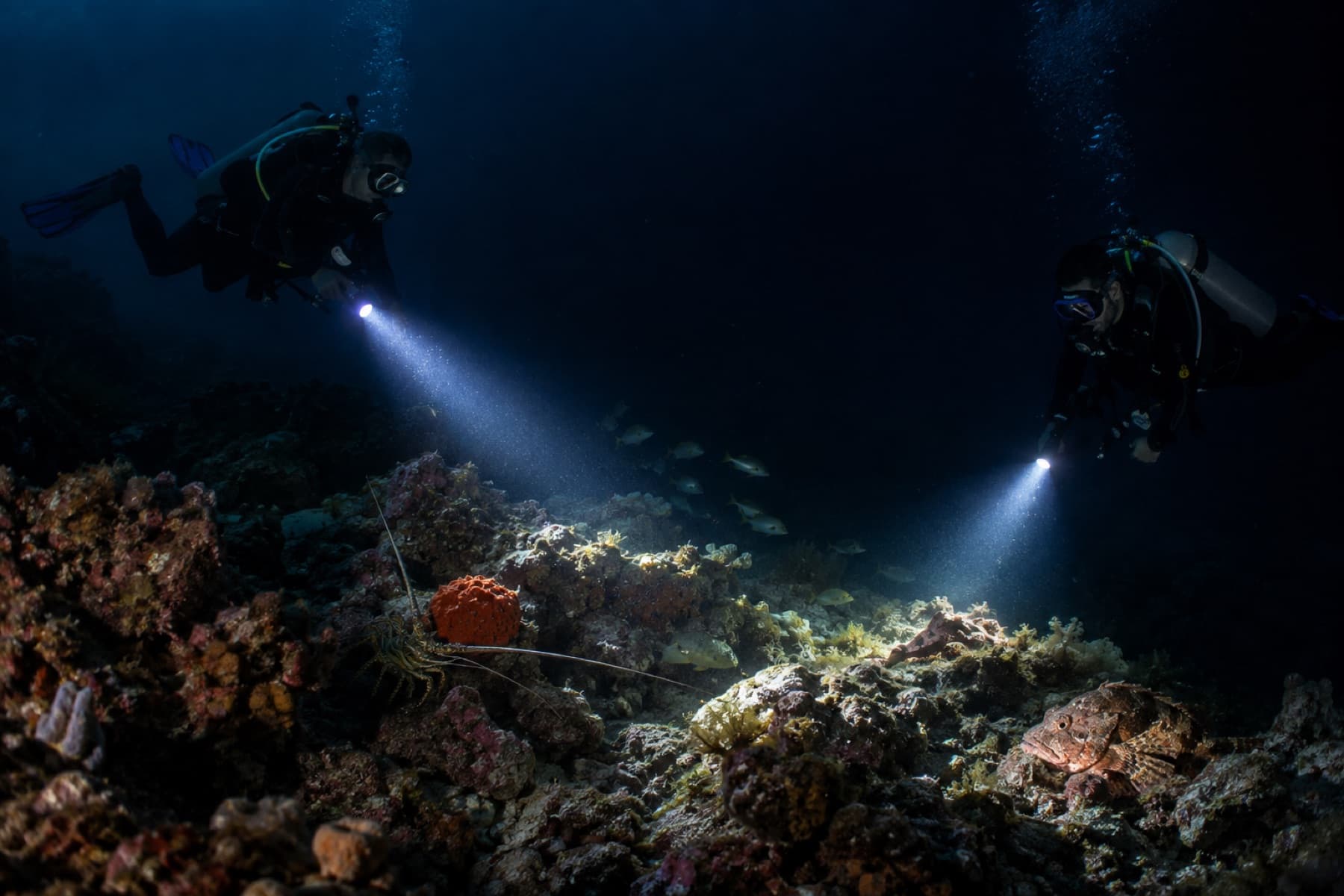
Night diving is the cheapest way to double the number of dive sites available to you, because a site you know well becomes genuinely unfamiliar after dark.
The marine life changes completely. Octopus and cuttlefish become active, crustaceans emerge, parrotfish sleep in mucus cocoons, and coral polyps extend to feed.
The course covers light management, communication by torch signal, navigation without visual references and the specific disorientation risks of diving in the dark.
| Track | Recreational |
|---|---|
| Prerequisites | Open Water Diver certification |
| Agency equivalents | PADI: Night Diver · SSI: Night & Limited Visibility · SDI: Night & Limited Visibility Diver |
- primary and backup light management
- torch signalling and buddy communication
- night navigation and reference use
- entry and exit procedures in darkness
- managing disorientation
- identifying nocturnal marine life
Edithburgh, Blairgowrie, Rye and Busselton are all substantially better after dark, and several of them are internationally known primarily as night dives.
Shallow depth, easy shore access and dense invertebrate life make jetty sites almost ideal for night diving — long, relaxed dives with constant activity.
A primary light failure at night without a backup turns a pleasant dive into a genuine problem, particularly under a structure.
Two lights is the minimum standard, and a third is common among divers who night dive regularly.
Where this qualification matters in Australia
Sites where holding this certification genuinely changes what you can do — not a list of everywhere it is accepted.
Natural next steps
Courses that build directly on this one.
Courses that lead here
Agency versions of this course
The same qualification under different names. All are mutually recognised by operators.
Centres documented as offering this level of training
Businesses where the relevant capability is verified or advertised. Always confirm the specific course directly.
Frequently asked questions
Is night diving more dangerous?
It adds disorientation and navigation challenges, which is why the training exists. With adequate lights, a known site and a buddy, it is a straightforward extension of normal diving.
What light do I need?
A reliable primary light with reasonable burn time, plus at least one backup. A marker light on the cylinder or SMB helps buddies stay together.
Where is the best night diving in Australia?
The southern jetties — Edithburgh, Blairgowrie, Rye and Busselton — are outstanding, with dense invertebrate and cephalopod activity after dark.